Last updated 2026-08-18
TL;DR
Colorado has no single statewide 'site services yard' license. You stack three to five approvals instead: a Secretary of State business registration, a CDPHE solid waste facility registration or permit, county or municipal zoning approval, and often a stormwater discharge permit. Government fees usually run $500 to $3,000 depending on facility type and county. Expect four to twelve months start to finish.
Do you need a license for a site services yard in Colorado?
Yes, but not the way most people expect. Colorado never issues a document called a 'site services yard license.' The state issues facility-specific approvals, and you'll stack several of them before you can legally operate.
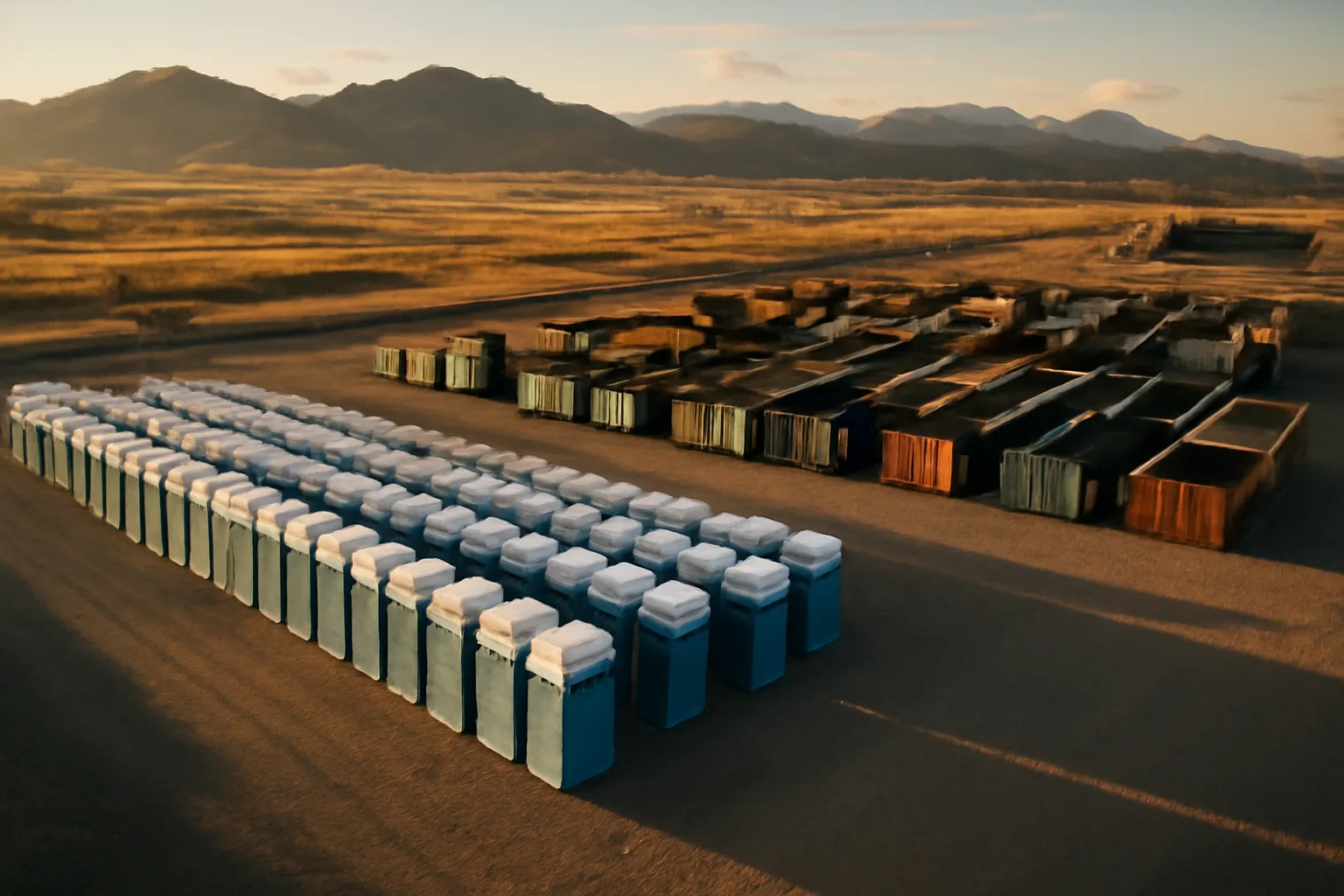
A site services yard, meaning a facility where you park, clean, repair, and stage portable toilets, roll-off containers, temporary fencing, or similar equipment, falls under at least two Colorado regulatory regimes. Anything involving the storage or transfer of liquid waste from portable sanitation units triggers the Colorado Department of Public Health and Environment's solid waste regulations under the Colorado Solid Waste Act, C.R.S. 30-20-100.5 et seq. [1] The physical yard itself is subject to county or municipal land-use approval, and in most Colorado counties that means a conditional use permit or an industrial zoning clearance.
On top of those two, you'll almost certainly need a Colorado Secretary of State business registration to operate legally, and if your yard has any stormwater runoff potential, a CDPHE stormwater general permit under the Colorado Discharge Permit System applies too. [2]
So the honest framing is simple: there's no single license, there's a permit stack. Miss any layer and you're exposed to stop-work orders, fines, or forced closure. The CDPHE solid waste program is the piece that matters most operationally, and it's where operators most often get tripped up.
What does Colorado's solid waste permit actually cover for a site services yard?
The CDPHE Solid Waste and Materials Management Program regulates facilities that store, process, or transfer solid waste, including liquid waste from portable sanitation. Under Colorado's solid waste rules, 6 CCR 1007-2, a facility that accepts waste from portable toilets or septic systems and processes or transfers it must register as a solid waste facility at minimum, and may need a full permit if it crosses certain thresholds. [3]
CDPHE draws a practical line. A small yard that stores only clean equipment and hauls waste off-site to a licensed treatment facility may qualify as an exempt or registered facility. A yard with any on-site waste processing or transfer, even just a dump station, typically needs a Class I or Class II facility permit. The permit application requires a site plan, an operations plan, financial assurance documentation, and a public notice period.
The Colorado Solid Waste Act says, in relevant part, that 'no person shall operate a solid waste disposal site and facility without first obtaining a certificate of designation.' [1] That definition of 'solid waste facility' is broad enough to catch portable sanitation transfer stations.
Financial assurance is the piece that surprises first-timers the most. CDPHE requires permitted facilities to show they can cover closure costs, usually through a trust fund, surety bond, or letter of credit. The amount tracks facility size and type. Confirm the current schedule directly with CDPHE's solid waste program. [3]
How much does a site services yard cost to license in Colorado?
State fee schedules move, so treat every number here as a starting point and confirm with the issuing agency before you budget.
Colorado Secretary of State LLC formation runs $50 as of 2024. [4] A corporation filing is also $50. Annual periodic report fees are $10 for a standard entity. Those aren't the expensive parts.
The CDPHE solid waste facility fees are where the real cost sits. Under 6 CCR 1007-2, registration and permit fees are tiered by facility class and waste volume. A basic registration (lowest tier, limited operations) has historically been in the $500 to $1,000 range. A Class I or Class II permit application has run $1,000 to $3,000 for the application fee alone, before you pay to prepare the required operations plan and site assessment, which consultants typically price at $3,000 to $10,000. [3]
County zoning and conditional use permits add another $500 to $2,500 in most Front Range counties. El Paso, Adams, and Weld counties each publish their own fee schedules. Confirm with the specific county planning department.
Stormwater is its own line. If you need a CDPHE stormwater Construction General Permit or an Industrial Stormwater permit, the permit itself carries a modest annual fee, but the real cost is the Stormwater Management Plan a civil engineer prepares for $1,500 to $4,000. [2]
| Approval | Typical government fee | Typical third-party prep cost |
|---|---|---|
| CO SOS business registration | $50 | $0-$200 (DIY) |
| CDPHE solid waste registration | $500-$1,000 | $500-$2,000 |
| CDPHE Class I/II permit (if required) | $1,000-$3,000 | $3,000-$10,000 |
| County zoning / CUP | $500-$2,500 | $1,000-$3,000 |
| CDPHE stormwater permit | Modest annual fee | $1,500-$4,000 |
| Total estimated range | $2,050-$8,550 | $6,000-$19,200 |
The prep costs are usually the bigger number. Hiring a solid waste consultant or environmental attorney to write your operations plan isn't optional at the permit level. CDPHE reviewers send incomplete applications back, and each return cycle costs you weeks.
How long does it take to get approved for a site services yard in Colorado?
Budget four months at minimum, six to twelve realistically, and don't sign a lease on a yard until you've confirmed zoning allows your use.
The Secretary of State registration is the easy part. You can finish it online in a day. [4]
CDPHE solid waste permit timelines are the controlling variable. Under C.R.S. 30-20-108, the program works on a defined decision window once it holds a complete application. [1] The operative word is 'complete.' If your application comes back as incomplete, the clock resets. Most first-time applicants go through at least one revision cycle, which adds 30 to 60 days. Full permits also require a public notice period, typically 30 days, which runs alongside the review but can't be waived.
County zoning timelines vary wildly. In a rural county with light planning staff, a conditional use permit might take three to four months and require a public hearing. In a city with a busy planning department, you might wait six months just for a hearing date. Front Range counties like Jefferson, Larimer, and Douglas run online permit portals that make tracking easier, but the queue isn't shorter.
Stormwater permits, if required, generally move faster, often four to eight weeks, because they skip public hearings.
Here's the practical takeaway. Start the CDPHE and county processes in parallel, not in sequence. Operators who run them one after the other often lose six months for no reason.
What are the Colorado Secretary of State requirements for a site services business?
Before any state or county environmental permit, your business entity has to exist legally. Colorado requires any LLC, corporation, or limited partnership operating in the state to register with the Colorado Secretary of State. [4]
For an LLC, you file Articles of Organization online, pay the $50 filing fee, and receive a state-issued ID number usually within one business day. You'll also designate a registered agent with a physical Colorado address.
If you operate under a trade name (a 'doing business as' name that differs from your legal entity name), Colorado requires a Statement of Trade Name filed with the Secretary of State, currently $20. Most site services yard operators do business under a branded name, so don't skip this step.
After formation, you file a Periodic Report each year, currently $10. [4] Missing two consecutive periodic reports triggers administrative dissolution. That means your business legally ceases to exist and your permits can be affected.
One thing people miss: Colorado has no general statewide business license separate from entity registration. Your 'license to operate' at the state level is your SOS registration plus your CDPHE permit. Local business licenses are a separate county or city requirement and vary by jurisdiction.
What local permits and zoning approvals does a Colorado site services yard need?
This is often the longest and least predictable piece of the stack. Colorado is a home-rule state, which means counties and municipalities hold real authority over land use. [5] A site services yard is almost always treated as an industrial or heavy commercial use, and most residential or light commercial zones won't allow it at all.
Before you sign a lease or a purchase agreement on any property, get a written zoning verification letter from the county or city planning department. Ask for a pre-application conference if the jurisdiction offers one. Some Colorado counties require you to attend a pre-application meeting before they'll accept a Conditional Use Permit (CUP) application. Denver, Colorado Springs, Aurora, and most larger cities publish online zoning maps and lookup tools that give you a preliminary read, but only the written letter is reliable.
For a portable sanitation yard specifically, watch two land-use triggers. Any outdoor storage of equipment gets classified in most counties as an industrial use requiring either an industrial zone or a CUP in an agricultural-industrial transition zone. A dump station or any wastewater processing on site can also trigger county health department review separate from CDPHE.
Elbert County, Weld County, and Pueblo County all have active site services operations near the Front Range. All three require a county planning approval before CDPHE will issue a permit, because CDPHE asks for proof of local land-use approval as part of its solid waste application package.
Comparing how Colorado structures this to neighboring states helps. The site services yard license in Arizona and site services yard license in California guides cover those states' distinct approaches, which differ in meaningful ways from Colorado's layered county-home-rule model.
Does a Colorado site services yard need a stormwater permit?
Probably yes, and this is the permit that catches operators off guard the most.
Colorado regulates stormwater discharges under the Colorado Discharge Permit System (CDPS), which runs under delegation from the EPA's National Pollutant Discharge Elimination System program. [2] If your yard is a new construction site that disturbs one or more acres, you need a Stormwater Construction General Permit before breaking ground.
Once the yard is operational, an Industrial Stormwater permit may apply. CDPHE's list of regulated industrial categories includes facilities that store or transfer waste materials, which covers most site services yards with any outdoor equipment or liquid handling. The category that typically applies is SIC code 4953 (refuse systems) or 7699 (repair services), depending on how your county classifies your primary business activity.
The required Stormwater Management Plan (SWMP) has to describe your Best Management Practices (BMPs), your inspection schedule, and your spill response procedures. Most operators hire a civil engineer or environmental consultant to write the SWMP, and that work runs $1,500 to $4,000 in Colorado's current market.
CDPHE's Water Quality Control Division maintains plain-language industrial stormwater permit guidance. Confirm the current version and SIC code applicability directly with their Denver office. [2]
What insurance does a Colorado site services yard operation need?
Insurance isn't a permit requirement from CDPHE, but it functions like one in practice because most commercial landlords and many county conditional use permits demand proof of coverage before you can operate.
The baseline for a site services yard in Colorado is a commercial general liability policy, typically $1 million per occurrence and $2 million aggregate. Liquid waste haulers also need pollution liability coverage, because a standard CGL policy specifically excludes pollution events, and a spill from a portable sanitation tank qualifies as a pollution event under most policy language.
Environmental pollution liability for a site services operation in Colorado generally runs $2,000 to $6,000 a year for a small to mid-size yard, depending on tank capacity and operational scope. Carriers vary widely. Get at least three quotes from brokers who specifically handle environmental or waste industry accounts.
Colorado has no statewide mandatory minimum insurance requirement specific to solid waste facility permits. CDPHE's financial assurance requirement for permitted facilities (the trust fund or surety bond for closure costs) is separate from and in addition to your operational insurance.
If you're hiring, Colorado requires workers' compensation coverage from the first employee, with no minimum headcount threshold. [6] That's stricter than some other states.
What does the Colorado solid waste application package actually require?
The CDPHE solid waste permit application for a new facility is not a simple form. Here's what their program guidance says you need to include. [3]
A complete application for a registered or permitted solid waste facility in Colorado typically requires: a site location map showing proximity to residences, wells, floodplains, and wetlands; a detailed site plan drawn to scale; a soils and geology report if the facility involves land disturbance or waste placement; an operations plan describing how waste is received, stored, processed, and transferred; a closure and post-closure plan; and financial assurance documentation showing you can fund closure if the business ceases.
For a portable sanitation yard with a dump station, the operations plan eats the most time. It needs to cover how you prevent spills, how you contain and clean up spills when they happen, your inspection schedule, and your employee training protocol.
CDPHE will also ask for proof of local land-use approval, which is why getting your county zoning clearance first, or at least in parallel, matters. Submitting a permit application without local approval in hand often stalls the CDPHE review.
You submit the application to CDPHE's Solid Waste and Materials Management Program in Denver. As of 2024 they accept paper and electronic submissions. Check the current submission preference on their program page. [3]
If you want a structured way to track all of this before you file, the SiteServicesPath Shared-Yard Economics Kit at /start walks through the full permit stack with a built-in cost tracker. It won't replace a lawyer or consultant for the actual filing, but it helps you understand what you're buying before you hire someone.
How does Colorado compare to neighboring states for site services yard licensing?
Colorado is mid-difficulty compared to its immediate neighbors. Here's the honest comparison.
Arizona operates through the Arizona Department of Environmental Quality and has a slightly simpler solid waste facility registration process for small portable sanitation yards, though its financial assurance requirements are comparable. See the site services yard license in Arizona guide for details.
California is much more complex and expensive. The CalRecycle permit process, plus local enforcement agency approvals, plus CEQA environmental review for many new facilities, can push timelines past 18 months and costs past $50,000. [7] The site services yard license in California article covers that in full.
New Mexico carries a lower overall fee burden but also has less developed guidance documentation, so applicants tend to spend more time in informal back-and-forth with the agency.
Colorado's specific challenge is the home-rule county layer. Because counties hold genuine authority over land use and some run overlapping health department permits, the number of approvals you coordinate at once is higher than in states with more centralized permitting.
Front Range growth pressure (particularly along I-25 from Pueblo to Fort Collins) means industrial land is expensive and scarce, which makes the zoning piece harder in practice even when the regulatory process reads straightforward on paper.
| State | Primary solid waste agency | Financial assurance required? | Typical total timeline |
|---|---|---|---|
| Colorado | CDPHE | Yes | 4-12 months |
| Arizona | ADEQ | Yes | 3-9 months |
| California | CalRecycle + local | Yes | 12-24+ months |
| New Mexico | NMED | Yes | 4-10 months |
What are the most common reasons Colorado site services yard applications get rejected or delayed?
CDPHE doesn't publish a rejection rate for solid waste applications, and nobody has good public data on how often first-time applicants get sent back for revisions. Anecdotally, consultants working in Colorado report that incomplete operations plans and missing financial assurance documentation account for most returned applications.
The problems that come up most: submitting a site plan that isn't drawn to a stated scale; failing to address floodplain status (Colorado's Front Range has significant areas with 100-year and 500-year flood designations under FEMA FIRM maps [8]); leaving the financial assurance section blank or dropping in a placeholder; and not including proof of local zoning approval.
On the county side, the most common delay is scheduling. A conditional use permit hearing date in a busy county might sit 90 days out from application acceptance. If your application has a deficiency that requires revision, you can miss one hearing cycle and wait another 30 to 60 days for the next slot.
One thing that genuinely helps: call CDPHE's solid waste program before you submit. They offer pre-application meetings and are usually willing to review a draft outline of your operations plan informally. That one conversation can save you a 60-day revision cycle.
If you're still deciding whether this makes financial sense, the how to start a site services yard in Colorado guide covers the operational side, and looking at how a very different state handles it, like the site services yard license in Alaska, gives useful contrast.
Frequently asked questions
Do you need a license for a site services yard in Colorado?
Yes, but it's not a single license. You need a Colorado Secretary of State business registration, a CDPHE solid waste facility registration or permit (depending on whether you process waste on site), county zoning approval or a conditional use permit, and likely a CDPHE stormwater permit. Missing any one of these puts you out of compliance. The CDPHE solid waste permit is the most consequential and time-consuming piece.
How much does it cost to license a site services yard in Colorado?
Government fees alone typically run $2,050 to $8,550, covering Secretary of State registration ($50), CDPHE solid waste registration or permit ($500 to $3,000), county zoning fees ($500 to $2,500), and stormwater permit costs. Third-party consultant and attorney costs for application prep add another $6,000 to $19,000 in most cases. The bigger your facility and the more complex your county's process, the higher the total.
How long does it take to get a site services yard license in Colorado?
Plan for four to twelve months. CDPHE works on a defined decision window under C.R.S. 30-20-108 once it holds a complete solid waste permit application, but 'complete' is the key word. Incomplete applications restart the clock. County conditional use permits can take three to six months on their own, depending on hearing schedules. Running CDPHE and county processes in parallel rather than sequentially saves several months.
Does Colorado require a solid waste permit for a portable sanitation yard?
If your yard has any on-site dump station, waste transfer, or processing activity, CDPHE's solid waste regulations under 6 CCR 1007-2 almost certainly apply. A yard that stores only clean equipment and hauls waste entirely off-site to a licensed treatment facility may qualify for a lower-tier registration. Check with CDPHE's Solid Waste and Materials Management Program to confirm which tier fits your operation before filing.
What is the CDPHE solid waste financial assurance requirement?
CDPHE requires permitted solid waste facilities to demonstrate financial ability to cover closure costs if the business stops operating. Acceptable mechanisms include a trust fund, surety bond, letter of credit, or corporate financial test. The required amount is set based on facility type and estimated closure cost. Confirm the current schedule and calculation methodology directly with CDPHE's solid waste program, as figures are updated periodically.
Does a site services yard in Colorado need a stormwater permit?
Probably yes. If construction disturbs one or more acres, a Stormwater Construction General Permit is required before breaking ground. Once operational, an Industrial Stormwater permit may apply under the Colorado Discharge Permit System if your yard involves outdoor equipment storage or liquid handling. The permit carries a modest annual fee but requires a Stormwater Management Plan, which typically costs $1,500 to $4,000 to prepare with engineering help.
Can I operate a site services yard from an agriculturally zoned property in Colorado?
Rarely, without a conditional use permit. Colorado counties treat site services yards as an industrial or heavy commercial use. Agricultural zones typically don't allow outdoor equipment storage or waste transfer as a by-right use. You'd need a CUP from the county, and approval is not guaranteed. A pre-application conference with the county planning department before signing any lease or purchase agreement is strongly recommended.
Does Colorado require workers' compensation insurance for site services yard employees?
Yes. Colorado requires workers' compensation coverage starting with the first employee, with no minimum headcount threshold. This applies to part-time and seasonal workers as well as full-time staff. The coverage must be from a licensed Colorado insurer or through self-insurance approved by the Division of Workers' Compensation. Penalties for non-compliance include fines and stop-work orders.
How do I register a site services business with the Colorado Secretary of State?
File Articles of Organization (for an LLC) or Articles of Incorporation (for a corporation) online with the Secretary of State. The filing fee is $50. You'll designate a registered agent with a physical Colorado address and receive your entity ID number typically within one business day. If you operate under a trade name, file a Statement of Trade Name for $20. File a $10 Periodic Report annually to keep the entity active.
What's the difference between a CDPHE solid waste registration and a full permit?
A registration covers lower-risk or smaller-scale facilities, generally those that don't process or transfer significant volumes of waste on site. A full Class I or Class II permit is required for facilities above certain thresholds or with more complex operations like on-site dump stations. Full permits require more detailed application materials, a public notice period, and higher financial assurance. CDPHE's solid waste program can tell you which tier applies to your specific operation.
Are there any Colorado county health department permits for a portable sanitation yard?
In some counties, yes. County health departments have separate permitting authority from CDPHE and may require their own approval for facilities handling liquid waste. Adams, Jefferson, and El Paso counties have active environmental health programs that may review site services yard operations independently of the state process. Contact the county health department directly in addition to the county planning department to identify any local approvals needed.
How does Colorado's site services yard licensing compare to Arizona or California?
Colorado sits in the middle. Arizona's ADEQ process is slightly simpler for small operations, with timelines of three to nine months. California is significantly more complex, with CalRecycle permits, local enforcement agency approvals, and CEQA review that can push past 18 months and $50,000 in total costs. Colorado's main challenge is the home-rule county layer, which adds variable zoning approvals that can extend timelines unpredictably depending on the specific county.
Sources
- Colorado General Assembly, Colorado Solid Wastes Disposal Sites and Facilities Act, C.R.S. Title 30 Article 20 Part 1: Colorado prohibits operating a solid waste disposal site and facility without a certificate of designation; defines solid waste facility broadly to include waste transfer and processing operations, and sets a decision timeline
- CDPHE, Colorado Discharge Permit System (CDPS) Stormwater Program: Colorado regulates industrial and construction stormwater discharges under the CDPS program, including facilities storing or transferring waste materials
- CDPHE, Solid Waste and Materials Management Program, Facility Permitting and Registration: CDPHE requires solid waste facility registrations and permits with tiered application requirements including operations plans and financial assurance; fee schedule and application package are maintained on this page
- Colorado Secretary of State, Business Division: Colorado LLC formation (Articles of Organization) costs $50; annual periodic report costs $10; Statement of Trade Name costs $20
- Colorado General Assembly, Colorado Constitution: Colorado is a home-rule state; counties and municipalities have substantial authority to regulate land use independently of state agencies
- Colorado Department of Labor and Employment, Division of Workers' Compensation, Employer Coverage Requirements: Colorado requires workers' compensation insurance beginning with the first employee; no minimum employee count threshold applies
- CalRecycle, Solid Waste Facility Permitting: California solid waste facility permits require CalRecycle concurrence plus local enforcement agency review; timelines for new facilities commonly exceed 12 to 18 months
- FEMA, Flood Map Service Center: FEMA FIRM maps identify 100-year and 500-year floodplain designations across Colorado's Front Range; CDPHE solid waste applications require documentation of floodplain status
- CDPHE, 6 CCR 1007-2, Regulations Pertaining to Solid Waste Sites and Facilities: Colorado solid waste regulations establish facility registration and permit tiers, application requirements, and financial assurance standards for solid waste operations including liquid waste transfer