Last updated 2026-08-18
TL;DR
Opening a site services yard in Delaware means registering your entity with the Division of Corporations, getting the right industrial zoning, pulling a Delaware business license, and clearing any DNREC wastewater rules. Startup costs run $15,000 to $80,000 or more depending on equipment and lot size. Plan on 2 to 6 months from first filing to first operating day.
What exactly is a site services yard and what does Delaware regulate?
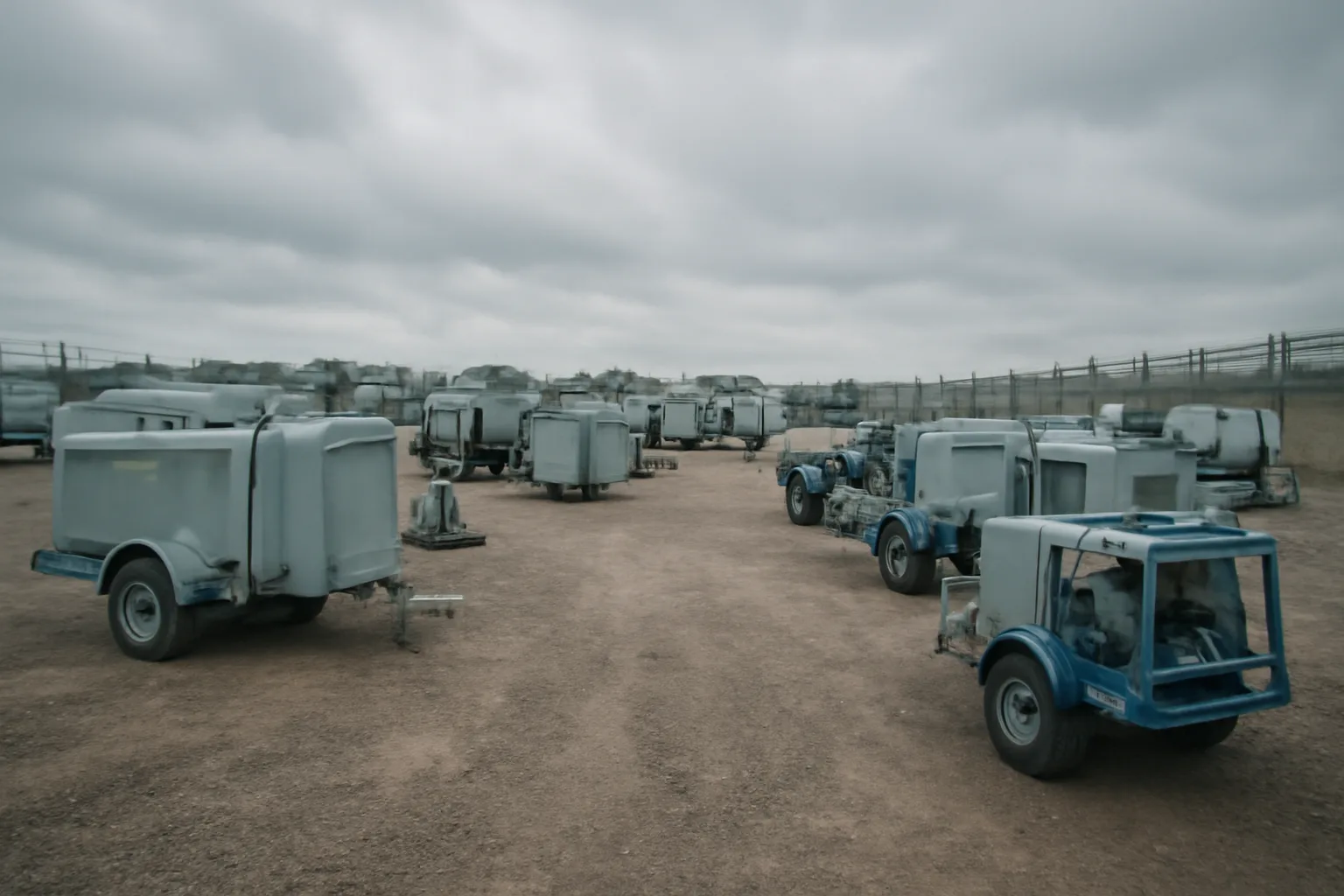
A site services yard is a staging and storage lot for construction-support gear: portable restrooms, temporary fencing, light towers, generators, ground protection mats. You bring the units in for cleaning, maintenance, and redeployment. Delaware does not license a "site services yard" as a single named category the way it licenses a used-car dealer. You're dealing with a stack of overlapping rules instead: state business registration, a general Delaware business license, local zoning approval, and, depending on what you wash and where the wastewater goes, environmental permits from the Department of Natural Resources and Environmental Control (DNREC).
That layered reality is actually good news. No single state board can deny you a "site services yard license" in one stroke. What stops people is getting zoning wrong, or running wash water without pretreatment approval. Those two things kill more yards in the planning stage than everything else combined.
Do you need a license for a site services yard in Delaware?
Yes, you need a Delaware business license, and it's not industry-specific. Every person or entity doing business in Delaware must get a business license from the Division of Revenue before opening [1]. The fee is modest (confirm the current amount at revenue.delaware.gov, since fees update), and you renew it annually by December 31.
Beyond that baseline, the specific triggers depend on what your yard actually does:
- If you handle portable restroom waste (septage), you're operating a septage hauler, and the trucks doing that work need individual registration with DNREC under Delaware's solid-waste regulations [2].
- If you clean units on-site and discharge wash water to a drain field or surface water, DNREC treats that as an industrial wastewater activity. You may need a National Pollutant Discharge Elimination System (NPDES) permit or a land application permit. Confirm which pathway applies with DNREC's Water Resources Section.
- If your yard stores hazardous materials above threshold quantities (unlikely for most yards, but relevant if you stock large fuel reserves), you may trigger emergency planning notification under SARA Title III [3].
Counties add their own layer. New Castle, Kent, and Sussex each have business licensing or registration requirements that sit on top of the state rules. Some municipalities pile on more. Check with the county clerk or licensing office for the jurisdiction where your yard sits.
One requirement catches new operators off guard. If any driver operates a commercial vehicle over 26,001 pounds GVWR, that driver needs a Commercial Driver's License (CDL), your vehicles need USDOT numbers, and you may need motor carrier authority if you cross state lines [4]. Delaware's CDL program runs through the Division of Motor Vehicles.
How do you register the business entity in Delaware?
Delaware is one of the easiest states to register a business in, which is why so many companies incorporate here even when they operate somewhere else. For a yard that will actually sit in Delaware and be run by Delaware residents, your real options are a sole proprietorship (file nothing with the state, just get the business license), a Delaware LLC, or a Delaware corporation.
Most small yard operators pick the LLC. You file a Certificate of Formation with the Delaware Division of Corporations [5]. The standard LLC filing fee is currently $90 (confirm with the Division of Corporations, since fees can change). You file online at corp.delaware.gov. Standard processing runs same-day or next-day, and expedited same-day service costs extra.
Once the LLC exists, get your Federal Employer Identification Number (EIN) from the IRS at no cost through irs.gov. You need the EIN before you can open a business bank account or hire anyone.
Then register with the Delaware Division of Revenue for the business license [1], and, if you'll have employees, with the Delaware Department of Labor for unemployment insurance and with the Division of Revenue for withholding tax. These are separate registrations even though they're all state agencies. The One Stop Business Registration portal at onestop.delaware.gov handles several of them together and is the fastest route.
What zoning and land use approvals does your Delaware yard need?
Zoning is where Delaware yards either clear fast or stall for months. A staging lot for heavy equipment and waste-service trucks is not a quiet neighbor. You need industrial or heavy commercial zoning in most jurisdictions. Light commercial or agricultural zoning almost never works without a variance or conditional use permit.
New Castle County zoning runs under the New Castle County Unified Development Code. Kent and Sussex have their own codes. If you're inside a municipality like Wilmington, Dover, or Seaford, the city or town controls zoning for properties within its limits, not the county.
Pull the zoning classification before you sign a lease or purchase contract on any parcel. Read what's permitted by right versus by conditional use permit. A conditional use permit means a public hearing before a Board of Adjustment, and that adds 2 to 4 months to your timeline in most Delaware counties. If the use is permitted by right in the zone, you skip the hearing and just need standard site plan review.
Any new construction or significant site work also needs a building permit from the county or municipal building department. If your yard will have a wash bay or any structure with a foundation, budget that process separately from zoning. Site plan review and building permit review often run in parallel, but they are not the same approval.
Call DNREC's Division of Waste and Hazardous Substances early if your operation involves any on-site waste processing, even just pressure-washing portable restrooms. In a pre-application meeting they'll tell you whether your setup triggers a permit and which type. That conversation is free and saves you from designing a wash bay you have to rebuild.
How much does a site services yard cost to start in Delaware?
A single number for startup cost is misleading, so here's a realistic breakdown by category:
| Cost Category | Low End | High End | Notes |
|---|---|---|---|
| Entity formation (LLC) | $90 | $300 | State fee plus optional registered agent |
| Delaware business license | $75 | $200 | Confirm current fee with Division of Revenue |
| Zoning/conditional use permit | $500 | $5,000+ | Hearing fees vary by county; attorney adds cost |
| DNREC pretreatment/wastewater permit | $0 | $3,000+ | Depends on discharge type; some operations are exempt |
| Lease deposit and first months' rent | $5,000 | $25,000+ | Industrial land in New Castle County runs high |
| Yard improvements (gravel, fencing, drainage) | $5,000 | $30,000+ | Varies enormously by parcel condition |
| Wash bay construction or portable system | $3,000 | $20,000+ | Compliant wastewater handling is non-negotiable |
| Initial equipment inventory | $0 | $50,000+ | If you're buying units to rent out, costs escalate fast |
| Insurance (general liability + commercial auto) | $3,000 | $10,000/year | See insurance section below |
| Working capital (first 90 days) | $10,000 | $30,000 | Payroll, fuel, supplies before revenue stabilizes |
A bare-bones owner-operator setup on leased land the landlord already improved might open for $15,000 to $25,000 all-in. A yard with a purpose-built wash bay, owned equipment inventory, and purchased land can hit $150,000 or more before the first unit rolls out. Most realistic first-year operators land between $40,000 and $80,000 [6].
The cost people underestimate most is compliant wastewater handling. A wash bay that drains to a proper interceptor and then to municipal sewer (with pretreatment approval from the local authority) is the cleanest path. Running wash water to a holding tank that gets pumped regularly works, but it adds ongoing cost. Draining to a ditch or bare ground without a permit is an environmental violation DNREC will enforce.
If you're working through yard sharing, lot cost allocation, or how to price your first contracts, the SiteServicesPath Shared-Yard Economics Kit ($249 one-time, at /start) lays out the cost math with worked examples. It's a planning tool, not a legal guide.
How long does starting a site services yard in Delaware take?
Plan on 2 to 6 months from your first filing to your first operating day, assuming no major zoning fight. Here's roughly how the time stacks up:
- Delaware LLC formation: 1 to 3 business days standard, same day with an expedited fee.
- EIN from IRS: immediate online, or up to 4 weeks by mail.
- Delaware business license: typically 5 to 10 business days.
- Zoning review (permitted by right): 4 to 8 weeks for site plan review and building permit.
- Conditional use permit (if required): add 2 to 4 months for the public hearing.
- DNREC permit (if required): pre-application to approval runs 1 to 4 months depending on permit type and workload.
The single biggest variable is whether you need a conditional use permit from the county Board of Adjustment. If you do, count on 4 to 6 months from lease signing to open. If your parcel is already zoned for the use, you can sometimes open in 60 to 90 days.
Time it against Delaware's construction season. Work ramps up in March and April. To catch spring jobs, start your zoning and license process no later than October or November of the year before.
What environmental permits does DNREC require for a site services yard?
DNREC is the agency most yard operators underestimate. It oversees air quality, water quality, solid waste, and hazardous waste in Delaware [2]. Your yard touches at least two of those.
Wastewater is the main concern. If you wash portable restrooms, ground mats, or other gear on-site, the wash water carries pathogens, surfactants, and, from toilet units, fecal coliform. Discharging that to a septic system, a dry well, or any surface feature without approval is a Clean Water Act violation, which Delaware enforces through its NPDES delegation with EPA [7].
Your wastewater options: 1. Connect to municipal sewer with a pretreatment agreement from the local sewer authority. This is usually the most straightforward path where sewer capacity exists. 2. Apply for a DNREC land application permit (spray irrigation on a suitable field). This works in rural Sussex or Kent County if you have enough suitable acreage. 3. Collect all wash water in an impervious holding tank and have a licensed septage hauler pump it out. No discharge permit for the yard, but real ongoing cost.
Storing the portable restroom units themselves on your yard is not usually regulated as a disposal activity, as long as units are sealed and not leaking. But a leaking unit that contaminates soil drops you into DNREC's remediation program. Good maintenance and a concrete or lined yard surface cut that risk.
Call DNREC's Office of Pollution Prevention at dnrec.alpha.delaware.gov before you finalize your site design. A pre-application meeting costs nothing and can keep you from building something you'll have to tear out.
What insurance does a Delaware site services yard need?
No Delaware statute requires a specific policy for a site services yard as a named category. You need coverage anyway, because your contracts will demand it and because one uninsured liability incident ends the business.
General liability is the baseline. Most contractors and municipalities that hire site services vendors require at least $1 million per occurrence and $2 million aggregate. Expect $2,000 to $6,000 a year for a small yard with one or two vehicles, depending on revenue, claims history, and how the insurer reads your operations [8].
Commercial auto covers your service trucks. If you haul portable restrooms on a truck-and-trailer combination over 26,001 pounds GVWR, your insurer needs to know, because a standard personal or small-business auto policy won't cover it.
Pollution liability is the coverage new operators skip and later regret. A restroom spill on a job site or a wash-bay leak onto a neighbor's property is a pollution event, and most general liability policies explicitly exclude pollution. A standalone environmental policy or a pollution endorsement runs $1,500 to $5,000 a year for a small operator and covers exactly the scenarios your general liability policy won't [8].
Workers' compensation is required in Delaware once you have employees. State law requires employers to carry it, with very limited exceptions [9]. The rate varies by job class; a technician who empties and cleans portable restrooms carries a higher rate than an office worker.
Get quotes from at least two specialty insurers who write construction-support or environmental services accounts. Standard business insurers often exclude the exact work site services yards do.
What equipment do you actually need to open the yard?
The minimum viable yard is simpler than people assume. You need a truck that can haul your equipment (for portable restrooms, that's usually a roll-off hoist truck or a dedicated vacuum/service truck), a way to clean units on-site or a contract with a facility that will, secure storage for your inventory, and the paperwork to operate legally.
For portable restroom work, the truck is the single most expensive line item. A used vacuum truck in serviceable condition runs $25,000 to $75,000 or more depending on age, tank size, and condition. A new unit from a major manufacturer tops $100,000. You can start by subcontracting the pumping to a licensed hauler while you build volume, which pushes the truck purchase down the road and lowers your startup capital.
Fencing, ground mats, and light towers are simpler to store and move. A flatbed trailer usually handles those categories. Trailers run $5,000 used to $20,000 new depending on capacity.
On-site tools: a pressure washer (1,500 to 3,000 PSI is typical for restroom cleaning), a hand truck or dolly for moving units, basic mechanical tools for repairs, and a supply of deodorizer and sanitizer. Chemical costs run roughly $0.50 to $2.00 per unit serviced depending on product and supplier contract.
Don't buy more inventory than you can deploy in the first 90 days. A yard full of idle units you can't service or rent is just capital sitting in the mud.
How do you find your first customers in Delaware?
Delaware's construction market is smaller than its neighbors but busy in specific corridors: Wilmington and Newark in New Castle County, the Dover area in Kent County, and the beach corridor (Rehoboth, Dewey, Ocean View) in Sussex County. The beach market swings hard by season: demand spikes April through October and drops sharply in winter.
General contractors are your primary customer. They need portable restrooms on every permitted construction site in Delaware. OSHA's construction sanitation standard (29 CFR 1926.51) requires one toilet per 20 employees where workers can't be expected to use a fixed facility [10]. That's a demand floor nobody can negotiate away.
Get on the vendor lists for the major general contractors in your area. Show up to Delaware Contractors Association events. Many counties and municipalities put portable restroom service out to bid for public projects; register as a vendor on Delaware's eProcurement portal (bids.delaware.gov) so you see those solicitations.
Event companies are the other big segment, especially for beach-area festivals and the fair circuit. The Delaware State Fair in Harrington runs late July each year and is one of the largest events in the state. An anchor event like that can carry a Sussex County yard's summer economics.
Price competitively, but don't cut below the point where you're profitable after fuel, labor, and hauling. The Delaware market isn't so saturated that you have to win on price alone. Reliability and fast response matter more to most contractors than saving $10 per unit per month.
What are the ongoing compliance requirements after you open?
Opening the yard is a one-time sprint. Staying compliant is a permanent background task. Here's what recurs:
Annual Delaware business license renewal by December 31 each year. The Division of Revenue mails a notice, but set your own reminder anyway [1].
DNREC permit reporting. Wastewater discharge permits typically require quarterly or annual monitoring reports filed with DNREC's water resources section. Missing a report is a violation even if your discharge is perfectly clean.
DOT vehicle inspections and registration renewals for any commercial vehicles. FMCSA safety rules apply if you cross state lines or operate above the relevant weight thresholds [4].
OSHA recordkeeping if you have 10 or more employees: keep a log of work-related injuries and illnesses on OSHA Form 300 and post the annual summary each February [11]. Smaller operations have lighter paperwork but still must report severe injuries.
Insurance renewals. Review coverage yearly. As revenue and inventory grow, your limits and endorsements may need updating.
Workers' compensation audits. Delaware insurers run annual payroll audits to true up your premium. Keep clean payroll records or the audit hands you a surprise bill.
The SiteServicesPath compliance calendar inside the Shared-Yard Economics Kit tracks Delaware-specific due dates for most of these. Available at /start for $249 one-time.
Frequently asked questions
Do you need a specific license to operate a site services yard in Delaware?
Delaware does not issue a single "site services yard" license. You need a general Delaware business license from the Division of Revenue, which every business operating in the state must have. Depending on your operations, you may also need DNREC environmental permits for wastewater discharge and USDOT registration for commercial vehicles. Confirm current requirements with the Division of Revenue at revenue.delaware.gov.
How much does it cost to start a site services yard in Delaware?
A minimal owner-operator setup on leased, already-improved land can start for $15,000 to $25,000. A yard with a purpose-built wash bay, owned equipment, and significant inventory typically costs $40,000 to $80,000 or more in the first year. The LLC formation fee is $90 and the business license fee is modest, but equipment, compliant wastewater infrastructure, and lease costs are the real budget drivers.
How long does it take to open a site services yard in Delaware?
Plan for 2 to 6 months from your first filing to your first operating day. Delaware entity formation takes 1 to 3 business days. The business license takes about 5 to 10 business days. Zoning review for a permitted use takes 4 to 8 weeks. If you need a conditional use permit with a public hearing, add 2 to 4 months. DNREC permits, if required, add another 1 to 4 months.
What type of business entity should I form for a Delaware site services yard?
Most small to mid-size yard operators choose a Delaware LLC. It separates personal and business liability, and Delaware's LLC statute is well-established. The state filing fee is $90 for a Certificate of Formation. You file through the Division of Corporations at corp.delaware.gov. After forming the LLC, register separately with the Division of Revenue for the business license and with the IRS for an EIN.
Does DNREC regulate wash water from portable restroom cleaning?
Yes. DNREC treats wash water from portable restroom cleaning as an industrial wastewater discharge. You need either a pretreatment agreement with the local sewer authority, a DNREC land application permit, or a closed holding-tank system hauled by a licensed septage carrier. Discharging untreated wash water to a ditch, dry well, or septic system is a Clean Water Act violation in Delaware. Contact DNREC's Water Resources Section before finalizing your wash bay design.
Do Delaware site services yards need workers' compensation insurance?
Yes. Delaware law requires employers to carry workers' compensation for employees, with narrow exceptions. There is no revenue or employee-count threshold that exempts most employers. A site services yard with even one service technician needs coverage. Rates for field workers in waste-service operations are higher than office rates; get a quote from an insurer familiar with environmental or construction-support accounts.
What zoning classification do I need for a site services yard in Delaware?
Industrial or heavy commercial zoning is almost always required. Light commercial and agricultural zones rarely permit staging yards for construction-support equipment and vacuum trucks by right. If your parcel needs a conditional use permit for the use, a public hearing before the county Board of Adjustment is required, which adds 2 to 4 months to your timeline. Confirm the zoning classification before signing any lease or purchase agreement.
Do I need a CDL to operate a site services yard in Delaware?
You need a CDL only if you or your employees operate commercial motor vehicles over 26,001 pounds GVWR. A vacuum truck, roll-off hoist truck, or large flatbed combination typically exceeds that threshold. If you cross state lines with those vehicles, you also need USDOT motor carrier registration. Purely local, lighter-equipment operations may not trigger CDL requirements, but confirm the weight classification of your specific vehicles with the Delaware DMV.
Is pollution liability insurance necessary for a site services yard?
Standard general liability policies typically exclude pollution events, and a portable restroom spill or wash-bay leak qualifies as a pollution event under most policy definitions. Pollution liability coverage or an environmental endorsement fills that gap. For a small yard, standalone pollution liability runs roughly $1,500 to $5,000 per year. Skipping it is a real risk given the nature of what site services yards handle.
How many portable restrooms does OSHA require per construction worker?
OSHA's construction sanitation standard at 29 CFR 1926.51 requires one toilet facility for every 20 employees at construction sites where fixed restrooms are not accessible. That creates a predictable, non-discretionary demand for portable restrooms on any active Delaware construction site. It's the primary regulatory reason general contractors are reliable customers for site services yards.
Where do site services yards find customers in Delaware?
General contractors are the core customer base. Get on their approved vendor lists and register on Delaware's eProcurement portal at bids.delaware.gov for public-sector bids. Event organizers in Sussex County's beach corridor are a major seasonal source, with demand peaking April through October. The Delaware State Fair in Harrington is one of the state's largest single events and worth pursuing annually.
Can I operate a site services yard from agricultural land in Delaware?
Generally no. Agricultural zoning in Delaware counties does not permit industrial equipment staging, vacuum truck operations, or portable restroom cleaning as by-right uses. You would need a variance or conditional use permit, and county boards are often reluctant to approve industrial-intensity uses in ag zones. Industrial or heavy commercial parcels near highway corridors are a much cleaner starting point.
What ongoing reports does Delaware require after the yard is open?
Annual Delaware business license renewal is due by December 31 each year. Any DNREC wastewater or environmental permit requires periodic monitoring reports, often quarterly. Commercial vehicles need DOT registration renewals and may require FMCSA safety filings. If you have 10 or more employees, OSHA Form 300 injury logs must be maintained and the annual summary posted each February. Insurance policies renew annually and require payroll audits.
Do Delaware counties have separate licensing requirements for a site services yard?
Yes. New Castle, Kent, and Sussex counties each have their own business licensing or contractor registration systems layered on top of the state business license. Municipalities like Wilmington and Dover add their own requirements. There is no single county-level "site services" license; the triggers are general business registration and, if applicable, contractor licensing. Check with the county clerk or licensing office for the specific jurisdiction of your yard.
Sources
- Delaware DNREC, Division of Waste and Hazardous Substances: DNREC regulates solid waste, hazardous waste, and wastewater discharges in Delaware, including from equipment cleaning operations.
- US EPA, SARA Title III / EPCRA Overview: Facilities storing hazardous materials above threshold planning quantities must report under SARA Title III emergency planning requirements.
- Federal Motor Carrier Safety Administration, Registration Overview: Commercial motor vehicles operating in interstate commerce require USDOT numbers and motor carrier authority registration with FMCSA.
- Delaware Division of Corporations, LLC Formation: Delaware LLC formation requires filing a Certificate of Formation with the Division of Corporations; the standard filing fee is $90.
- US Small Business Administration, Small Business Startup Costs: The SBA guidance on startup cost calculation informs the cost-category methodology used in the startup cost breakdown table.
- Delaware DNREC, NPDES Permit Program: Delaware administers the NPDES permit program under a delegation agreement with EPA; discharges to surface waters require a permit.
- US Department of Labor OSHA, 29 CFR 1926.51 Sanitation Standard: OSHA requires one toilet facility per 20 employees on construction sites where fixed restroom access is not available.
- US Department of Labor OSHA, Recordkeeping Overview: Employers with 10 or more employees must maintain OSHA Form 300 injury logs and post the annual summary each February.