Last updated 2026-08-18
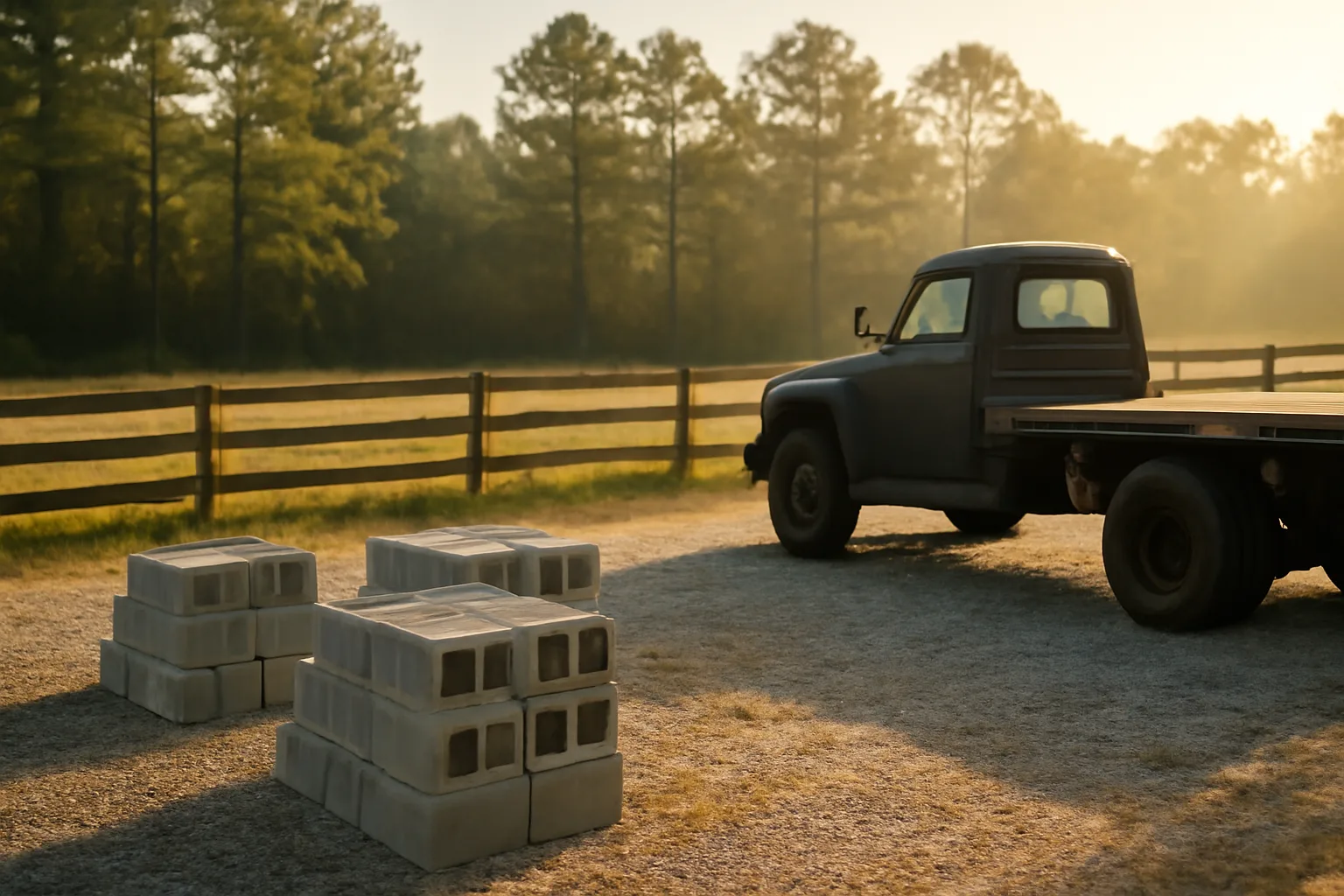
TL;DR
Alabama does not issue a single, unified 'site services yard' license. You need a county business license in the county where your yard operates and an Alabama state privilege license. If you sell goods to the public, an annual Sellers Use Tax license is also required. Total startup costs for paper compliance typically run $25 to $150, and the process takes 1 to 4 weeks depending on county issuance speed. Zoning clearance is the real bottleneck, not the state.
Do you need a license for a site services yard in Alabama?
Yes, you do. But the paper path is fragmented. Alabama does not regulate 'site services yards' as a distinct business category. What exists is a multi-layer system of county-administered business licenses, a state privilege license, and often a municipal license if the yard lies inside city limits. The core requirement is Section 40-12-40 of the Code of Alabama, which says 'no person shall engage in or carry on any business' without first obtaining a privilege license from the county probate judge or license commissioner. [1] A site services yard, whether it stores equipment, materials for hire, or acts as a staging point, is a business. That triggers the requirement.
For most operators, the practical checklist is three items: a county business license, a state privilege license number from the Alabama Department of Revenue, and a Sellers Use Tax license if the yard sells any materials, supplies, or services to customers. You may also need a city business license if the yard address is within city limits, and a zoning certificate from the local planning department proving commercial or industrial use is allowed.
Nobody asks for a 'site services yard license' by that name. The clerk will ask what your business does. Be accurate: describe it honestly as equipment staging, materials storage, or temporary labor dispatch depending on your model. That description determines the license class code the county assigns, which sets the fee.
How much does a site services yard license cost in Alabama?
Costs are local, not state-determined. A county business license for a small service yard typically ranges from $25 to $150 annually. The state privilege license fee varies by business classification but is often a flat $15 to $50 for smaller operations, collected when you register with the Alabama Department of Revenue. [1]
In Jefferson County, for example, the fee schedule has base rates starting at $50 for many service businesses with under $10,000 in gross receipts. In smaller counties like Cullman, the minimum license fee can be as low as $25. [2] But counties often tier fees by gross receipts. A yard grossing $100,000 annually might pay $100; one grossing $500,000 might pay $300. Call the county license commissioner's office with your projected first-year gross revenue to get a binding quote. There is no central state fee table for site services yards.
A Sellers Use Tax license from the Alabama Department of Revenue has no cost. The application is free online via My Alabama Taxes. [3] If a city license is required, those fees mirror county prices, typically $25-$100. The biggest variable cost is not the license itself but any required zoning variance ($150-$500 in application fees) if the lot is not already zoned correctly.
How long does getting licensed take in Alabama?
The shortest realistic timeline is one day. Walk into a county license office with a completed application and check, and you can walk out with a license in Montgomery County or Autauga County if zoning is pre-cleared. [4] For most, the process takes one to four weeks. The delay is almost always zoning, not licensing.
County business license issuance itself is fast: same day or next day after application. The state privilege license registration through the Alabama Department of Revenue is instant online; you get a confirmation number immediately. [5] The state's Sellers Use Tax license processes in 1-2 business days once the online application is submitted.
The bottleneck is the local planning department. Most Alabama counties require a zoning verification letter or certificate of occupancy before they issue the business license. That zoning sign-off can take two to four weeks if the parcel needs a site plan review or a variance hearing. If you are buying or leasing land that is already zoned for industrial or commercial use with no conditions, the zoning letter can come in a week. If you need a conditional use permit, plan on 30 to 60 days and a public hearing. Start with zoning, not with the license form.
The Alabama paper path, step by step
Step 1: Confirm the parcel's zoning with the county planning department. Get a zoning verification letter. If zoning prohibits the activity, apply for a variance or conditional use permit before anything else.
Step 2: Register your business entity with the Alabama Secretary of State if you are forming an LLC or corporation ($200 filing fee for an LLC online). [6] Sole proprietorships skip this.
Step 3: Apply for the state privilege license through the Alabama Department of Revenue. This can be done online via My Alabama Taxes or by submitting Form COM:101 at your county probate office. [5]
Step 4: Apply for the county business license at the office of the Probate Judge or License Commissioner in the county where the yard is physically located. Provide your zoning letter, business entity paperwork, and estimated gross receipts.
Step 5: If the yard sells any goods or services directly to customers (materials, supplies, equipment rental without a contractor's exemption), apply for a Sellers Use Tax license online at My Alabama Taxes. [3]
Step 6: Check with the city clerk if the yard address is within city limits. Many Alabama municipalities, including Birmingham, Huntsville, and Montgomery, require a separate city business license. City and county licenses are independent; holding one does not exempt you from the other.
Zoning is the real gatekeeper for a site services yard in Alabama
Alabama gives counties and municipalities wide authority over land use under Title 11 of the Code of Alabama. [7] A site services yard is a commercial activity. If the parcel is zoned residential, agricultural, or unclassified, you cannot operate without a zoning change or conditional use permit. The county license commissioner will not issue a business license for an address that lacks proper zoning clearance.
Each county handles zoning differently. Baldwin County requires a 'Zoning Compliance Verification' application, a $50 fee, and a 10-business-day review. [8] Mobile County's planning department may require a site plan showing parking, drainage, and setbacks, especially if the yard involves outdoor storage of materials or vehicles. A site plan review adds 2-3 weeks. If a public hearing is needed, add 30 days minimum.
Do not sign a lease or buy land without a written zoning clearance. A verbal assurance from a real estate agent or seller has no weight with the license commissioner. Some counties, like Winston, have no countywide zoning at all outside incorporated areas. In those places, the zoning step disappears entirely and the license path is two days. Confirm your specific county's map.
Common mistakes that slow down the process
The top mistake is applying for the county license before getting zoning approval. The application gets rejected and you start over. Second is misclassifying the business: calling a materials yard a 'handyman service' when it stores bulk aggregates. The fee class can change and a tax audit down the line can claw back the difference plus penalties.
Another common error is skipping the Sellers Use Tax license. Even if you are primarily a storage yard, any direct sale of bagged goods, fill materials, or equipment rental with an operator may trigger tax collection obligations. Alabama Department of Revenue Rule 810-6-1-.02 requires sellers to collect and remit sales tax. [9] Getting the license upfront is free and avoids a penalty.
Finally, many new operators think a state privilege license replaces a county license. It does not. Section 40-12-40 requires both. The state license number is reported on your county application, but the county issues its own paper. Both must be current each year.
Ongoing renewal and compliance costs
The county business license renews annually, typically by January 1 or based on the fiscal year of October 1 to September 30 depending on the county. [10] Renewal fees are based on prior-year gross receipts, calculated on Form ABE:RD-3 supplied by the county license office. Late renewal incurs a penalty, commonly 15% of the license fee plus interest.
The state privilege license no longer requires a separate annual renewal for most businesses as of Act 2015-27, which eliminated the standalone state business privilege tax for most pass-through entities and small businesses. [11] However, you must still maintain an active registration with the Department of Revenue if you hold a Sellers Use Tax license. Sales tax returns are monthly, quarterly, or annually depending on collection volume.
Budget $25-$150 per year for the county license, plus $0-$100 for city license if applicable, plus a $0 renewal fee for the state Sellers Use Tax account. Some counties also assess a personal property tax on business equipment, filed annually through the county revenue commissioner's office.
Does the type of site services matter for licensing?
Yes, the scope of activity matters at the county level. A bare land holding yard generating no direct sales may attract a lower fee class than a yard renting portable toilets, storage containers, and heavy equipment on-site. Some counties, like Madison, use NAICS codes to classify businesses and assign fees. [12] Yard storage alone may map to NAICS 493110 (General Warehousing and Storage). Equipment rental with operator maps to NAICS 532412. Providing on-site labor dispatch may trigger a separate classification.
Your honest description to the license commissioner determines the class. A wider range of services typically means a higher gross receipts tier and a larger fee. But the underlying document requirements (zoning clearance, state registration, tax license) do not change. The SiteServicesPath Shared-Yard Economics Kit notes that zoning conditions often restrict activity scope more than the license class does; a conditional permit may limit yard operating hours, outdoor lighting, or noise levels, all of which shape what services you can offer.
Can you operate a site services yard from home in Alabama?
The question trips up many first-timers. Alabama has no state law forbidding home-based commercial yards outright, but local zoning resolves it almost instantly. Most residential zones in populous counties explicitly prohibit outdoor storage of commercial equipment, vehicles over a certain weight, or materials visible from the street. Jefferson County's zoning resolution Section 4-2-1 lists 'storage yard' as a prohibited use in R-1 through R-4 residential districts. [13]
Agricultural zones in rural counties offer more leeway. A 5-acre parcel zoned A-O (Agricultural-Open) in Cullman County may allow equipment storage with no special permit if the activity is incidental to the agricultural use of the land. But a dedicated commercial yard generating outside traffic requires a rezoning. In counties without zoning, there is no restriction beyond any deed covenants on the property. Check those before you buy.
Local differences that change your timeline
Alabama's 67 counties operate with high autonomy on business licensing. Lee County processes licenses online and can issue within 24 hours if zoning is already cleared. Mobile County requires a physical visit for first-time applicants. Dallas County may need a week for manual processing. No state database tracks county issuance times; you call the county license commissioner directly.
Municipal licenses compound the variation. Huntsville requires a city business license and often a separate fire marshal inspection for yards storing combustible materials. [14] That inspection adds 1-2 weeks. In Hoover, the city code requires a 'Business License Clearance Form' signed by the building official, the fire chief, and the zoning administrator before issuance. That multi-signature clearance is a real three-week sequence. When planning your timeline, map out the specific city and county path for your exact parcel, not the state average.
Paper that proves you are licensed
The county business license is a physical document, typically 8.5x11 inches, bearing the county seal, the license number, the business name, address, and expiration date. Post it at the yard office. The state Sellers Use Tax license is downloaded as a PDF from My Alabama Taxes; the state does not mail a paper copy. The privilege license confirmation is a number, not a certificate.
When a customer, a lender, or a general contractor asks whether you are 'licensed,' they usually mean the county business license. It is the visible credential. A Certificate of Good Standing from the Alabama Secretary of State ($28) adds weight if you are an LLC or corporation, but it is not a license in the regulatory sense. [6] If you are bidding on government contracts, some require a copy of the county license and the Sellers Use Tax license with your bid package.
Nobody will ask for a 'site services yard license' by name. They will ask for your county business license and your tax ID number.
What to confirm with the relevant board before you file
Before you spend a dollar on licensing, confirm these three things directly with the issuing offices. First, call the county license commissioner and read the physical parcel address. Ask: is this parcel zoned in a way that permits a commercial storage yard? What documentation do you require to prove zoning compliance? Second, call the city clerk if the address is inside city limits and ask the same question. Third, contact the county planning department with the parcel ID number and ask for a written zoning verification letter.
The state's Online Privilege License application is low-risk; you can complete it in 15 minutes and obtain immediate confirmation. [5] The real risk is a zoning denial after you have signed a lease. A $25 pre-application zoning letter buys you certainty. If the county requires a site plan, hire a local surveyor or civil engineer familiar with that planning department's expectations. A site plan that fails setbacks by two feet is a correctable but costly delay.
Why a 'site services yard license in Alabama' is not a single thing
Search traffic tells us people want one form and one fee. Alabama's structure does not work that way. The state delegates licensing to counties via Section 40-12-40 and trusts counties to enforce zoning under Title 11. [1, 7] The result is a path that can be two forms and $25 in Winston County or five forms, three inspections, and $250 in Huntsville city limits.
Operators who treat 'site services yard license' as one task get stuck. The people who move fastest treat it as three independent parallel tracks: zoning (county planning, 2-4 weeks), business licensing (county commissioner, same day if zoning is done), and state tax registration (online, 1 day). Start all three simultaneously. The SiteServicesPath Shared-Yard Economics Kit maps this same county-by-county process for every state because the paper path is always local, never national.
Frequently asked questions
Do you need a state license to open a site services yard in Alabama?
There is no single state-issued 'site services yard license.' You need a state privilege license registration through the Alabama Department of Revenue and, if you sell goods, a Sellers Use Tax license. The primary operating license comes from the county where the yard is located. The state privilege registration is obtained online via My Alabama Taxes and is instant.
How much does a privilege license cost in Alabama?
The state privilege license fee varies by business classification but is often $15 to $50 for small service-oriented businesses. Many counties still collect the state privilege license fee at the county level when you apply for the county business license. Confirm the exact amount with your county license commissioner, as it is based on the NAICS code they assign to your yard's activities.
Can I get a business license without zoning approval in Alabama?
No. In counties with zoning, the license commissioner requires proof of zoning compliance before issuing a business license. That proof is usually a zoning verification letter or a certificate of occupancy from the planning department. In counties without zoning, such as portions of Winston County, this step does not apply.
Is a Sellers Use Tax license required for a site services yard?
It is required if the yard makes retail sales of materials, supplies, or equipment rentals to end users. Even incidental sales of fill dirt, gravel, or bagged cement can trigger the requirement. The license is free and obtained online through the Alabama Department of Revenue. Not having it when selling taxable items leads to penalties.
How long does a county business license take in Alabama?
If zoning clearance is already in hand, most counties issue the business license the same day or within one business day. The overall timeline, including zoning approval, typically runs 1 to 4 weeks. Zoning variances or conditional use permits that require a public hearing can extend the process to 60 days.
What is the penalty for operating without a license in Alabama?
Operating without a county business license or state privilege license violates Section 40-12-40 of the Code of Alabama. Penalties include back taxes, interest, and a civil penalty that can be up to 50% of the unpaid license fee, plus potential misdemeanor charges. Counties may also issue a cease-and-desist order shutting down the yard.
Do I need a city license if I already have a county license?
Yes, if the yard address is inside city limits. City licenses are independent of county licenses. Cities like Birmingham, Huntsville, and Mobile require their own license and often their own zoning or inspection sign-offs. The city fee is typically $25 to $100 annually, separate from the county fee.
Can a site services yard be operated on agricultural land in Alabama?
Possibly. If the county zoning ordinance allows agricultural land to host commercial equipment storage and the use is incidental to farming operations, no rezoning may be required. But an agricultural parcel used strictly for a non-farm commercial yard usually requires a rezoning to commercial or industrial. In counties without zoning, the use is unrestricted by the county.
Do I need an Alabama contractor's license for a site services yard?
Not for the yard itself. An Alabama contractor's license from the Licensing Board for General Contractors is required only if the yard's business performs construction work where the cost exceeds $50,000. If the yard merely stores contractor equipment or materials without performing contracting work, the contractor's license is unnecessary.
Are there environmental permits needed for a site services yard in Alabama?
If the yard stores fuel, oil, or chemicals aboveground, the Alabama Department of Environmental Management (ADEM) may require a stormwater discharge permit or a Spill Prevention, Control, and Countermeasure (SPCC) plan. A plain equipment and materials storage yard with no hazardous substances typically does not trigger ADEM permits at the startup stage. Check with the ADEM Water Division if you have tanks or chemical storage.
How do I classify my business for the Alabama privilege license?
The county license commissioner assigns a classification based on your description of activities. Be specific. Say 'outdoor storage yard for rental construction equipment and bulk materials' rather than 'general business.' The classification affects the state privilege license fee and the county fee tier. You can also reference NAICS codes 493110 or 532412 to guide the conversation.
Does Alabama require a bond for a site services yard?
No, Alabama does not require a surety bond for site services yard operators as a class. A bond is typically required only for specific regulated professions like general contractors or for certain specialized permits. A county may ask for a bond if the yard involves activities like demolition debris storage, but this is rare and local.
What happens to the license if I move the yard to a different county?
You must obtain a new county business license in the new county. The old county license does not transfer. You also must update your state registration with the Department of Revenue to reflect the new physical address. Zoning approval must be obtained for the new parcel before the new county license is issued.
Sources
- Code of Alabama, Section 40-12-40: No person shall engage in or carry on any business without a privilege license from the county.
- Alabama Department of Revenue, Sellers Use Tax: Sellers Use Tax license has no cost; application is free online via My Alabama Taxes.
- Montgomery County Probate Office, Business License: Montgomery County issues business licenses same-day with completed application and zoning clearance.
- Alabama Department of Revenue, My Alabama Taxes: State privilege license registration and Sellers Use Tax license processing are available online with immediate confirmation.
- Code of Alabama, Title 11: Counties and municipalities have zoning authority under Title 11, which dictates land use for commercial activities.
- Baldwin County Planning and Zoning Department, Zoning Compliance Verification: Baldwin County requires a Zoning Compliance Verification application with a $50 fee and 10-business-day review.
- Alabama Department of Revenue, Rule 810-6-1-.02: Sellers must collect and remit sales tax on taxable sales; failing to register incurs penalties.
- Jefferson County Commission, Business License Renewal: County business licenses renew annually; late renewal penalties are typically 15% of the license fee.
- Alabama Act 2015-27: Act 2015-27 eliminated the standalone state business privilege tax for most small businesses and pass-through entities.
- Madison County License Commissioner, NAICS Code Information: Madison County uses NAICS codes to classify businesses for license fee purposes.
- Jefferson County Zoning Resolution, Section 4-2-1: Storage yard listed as a prohibited use in R-1 through R-4 residential districts in Jefferson County.
- City of Huntsville, Business License Requirements: Huntsville requires a city business license and may require a fire marshal inspection for yards storing combustible materials.