Last updated 2026-08-18
TL;DR
Starting a site services yard in Connecticut means registering your entity with the Secretary of the State ($120 for an LLC), winning local zoning or special-permit approval, and clearing state environmental rules for waste transport and stormwater. Startup costs run $5,000 to $200,000-plus depending on scale. The full paper path takes three to nine months, and zoning is almost always the long pole.
What exactly is a site services yard, and how does Connecticut define it?
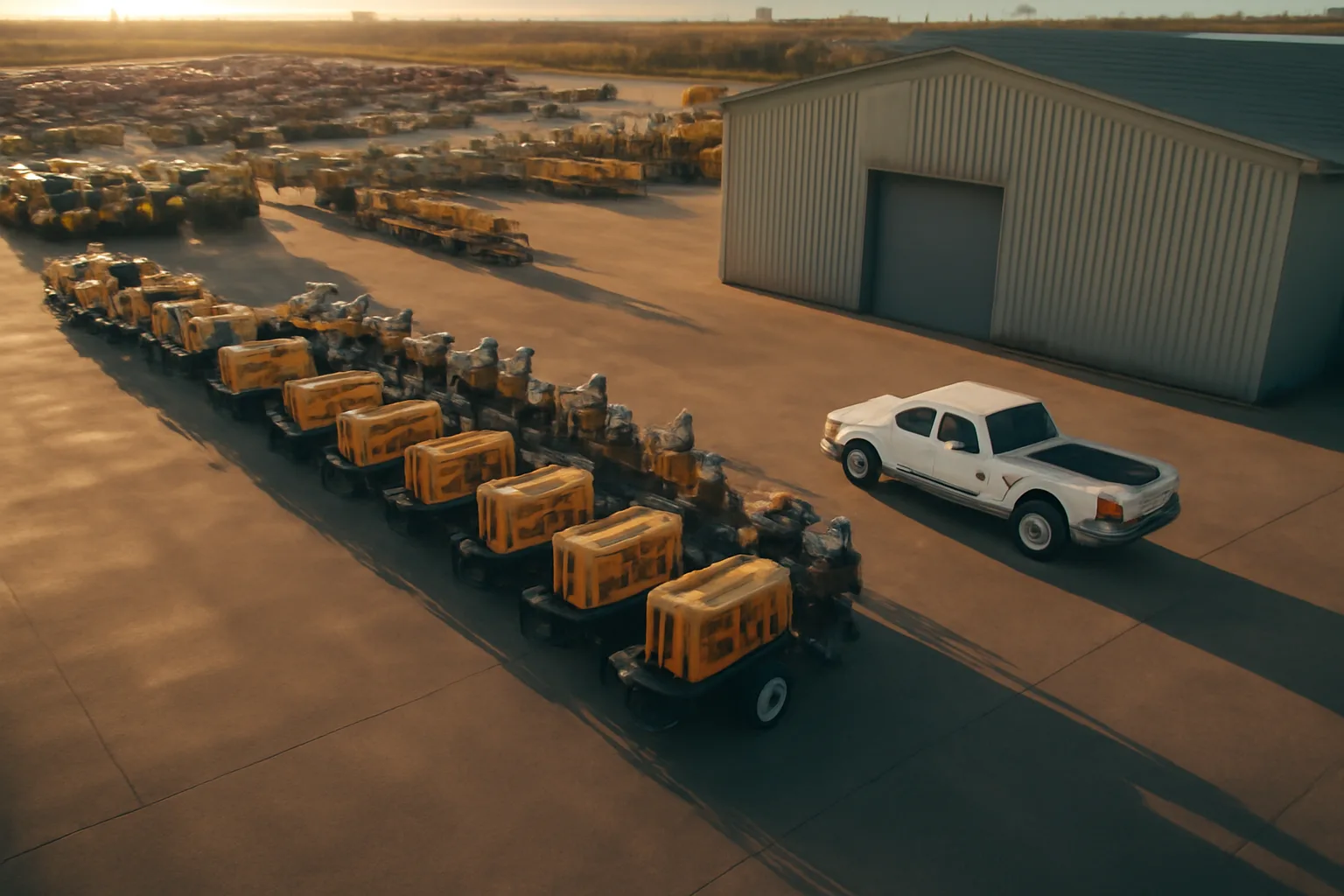
A site services yard is a staging and storage base for construction support equipment: portable toilets, temporary fencing, roll-off containers, light towers, welfare units, and similar gear. The yard is home base. Equipment goes out to job sites, comes back dirty, gets serviced, and goes out again.
Connecticut has no statute that says "site services yard" in those words. What the state has instead is a web of rules tied to specific activities you'll almost certainly run: solid-waste handling (if you rinse portable restrooms or manage container residue), stormwater discharge (if wash-down water hits the ground), and commercial vehicle operations (if your trucks exceed 26,001 lbs GVW). Each activity has its own paper trail.
The definition that matters to your local zoning board is simpler. You're running an outdoor storage yard with a service building, vehicle traffic, and materials that need containment. That puts you in the industrial or heavy-commercial land-use category in most Connecticut towns. Get used to that framing. It's how the zoning officer will think about your application, so it's how you should think about it too.
Do you need a license for a site services yard in Connecticut?
No single "site services yard license" exists in Connecticut. You assemble a stack of authorizations, each from a different agency or municipal office, that together let you operate legally. Miss any one of them and you risk a shutdown or fines.
Here's the honest breakdown:
Business entity registration. You register your LLC, corporation, or other entity with the Connecticut Secretary of the State. The online LLC filing fee is $120 as of the most recent published schedule, but confirm the current amount before you file [1].
Local zoning approval. This is the big one. Connecticut is a home-rule state under CGS Title 8, so each of its 169 municipalities controls its own zoning. A use allowed by right in one town needs a special permit in the next town over. Pull the zoning regulations for the exact parcel you're targeting and confirm the permitted-use category before you sign a lease or purchase agreement [2].
Solid-waste transporter permit. If you haul waste from portable restrooms or roll-off containers, Connecticut DEEP requires a solid-waste transportation permit under CGS Section 22a-209. Confirm the current fee and documentation with DEEP's Waste Engineering and Enforcement Division [3].
Industrial stormwater general permit. Wash-down operations almost certainly trigger coverage under Connecticut's industrial stormwater general permit. You register with DEEP and submit a Stormwater Pollution Prevention Plan (SWPPP). There's no per-facility fee to register under the general permit, but preparing the SWPPP through a qualified professional costs money (see the cost section below) [4].
Federal DOT operating authority and USDOT number. If you haul waste across state lines or run commercial motor vehicles above the federal threshold, you need a USDOT number and possibly Motor Carrier operating authority from FMCSA [10].
Local building permit. Any structure you put on the property, including a wash bay, office, or equipment shelter, needs a building permit from the municipal building official.
Some operators also need a groundwater discharge permit if wash water enters a septic system rather than a municipal sewer. Check with DEEP's Water Permitting and Enforcement Division on that one.
The short answer: you don't get one license. You build six to eight separate authorizations, and they only work as a set.
How much does starting a site services yard cost in Connecticut?
Cost swings hard on three things: whether you lease an already-zoned industrial parcel or buy raw land, how many equipment categories you start with, and whether you build a wash bay from scratch. A bare-bones start can stay under $30,000. A mid-size launch runs $80,000 to $200,000 before your first invoice is paid.
Here's a realistic range for a small-to-mid-size operation:
| Cost Item | Low End | High End | Notes |
|---|---|---|---|
| LLC formation (state filing) | $120 | $120 | Secretary of the State fee; confirm current amount [1] |
| Zoning application / special permit | $200 | $2,500 | Varies by municipality |
| Legal and land-use counsel | $1,500 | $8,000 | Worth it for special permit hearings |
| SWPPP preparation | $1,500 | $5,000 | Qualified professional required |
| DEEP solid-waste transporter permit | Confirm with DEEP | Confirm with DEEP | Fee schedule changes; verify at DEEP [3] |
| Building permits (wash bay, office) | $500 | $5,000 | Based on construction value |
| Site improvements (paving, drainage) | $10,000 | $75,000+ | The biggest variable |
| Initial equipment inventory | $5,000 | $150,000+ | Portable toilets, containers, trucks |
| Insurance (GL + commercial auto) | $4,000/yr | $15,000+/yr | See insurance section below |
| First-year operating capital reserve | $10,000 | $30,000 | Fuel, labor, servicing chemicals |
The site improvements line is where operators get surprised. Connecticut's stormwater rules mean you almost always need a paved, graded yard with contained drainage. Gravel over dirt won't pass a SWPPP inspection or satisfy most zoning boards.
For a bare-bones start, renting an already-improved industrial lot with 20 to 30 portable restrooms plus one service truck, you could get under $30,000 in pre-revenue spend. A mid-size launch of 80 to 150 units plus roll-off service runs $80,000 to $200,000.
Nobody has precise Connecticut-specific data on average startup costs for this exact business. The ranges above are built up from component costs, each with a traceable source.
How long does the Connecticut startup process take?
Three to nine months is the honest range, and zoning is almost always the long pole.
Entity registration at the Secretary of the State takes one to five business days for online filings under normal conditions [1]. That part is fast.
Zoning is the slowdown. Connecticut towns hold zoning hearings on a monthly or bi-monthly cycle. A special-use permit typically needs a pre-application meeting with the zoning officer, a formal application with site plan, a public hearing with legal notice (usually published 15 days out), and a decision within 65 days after the hearing closes under CGS Section 8-7d [2]. That 65-day clock doesn't start until the hearing closes, and hearings can be continued. From first contact to final decision, four to six months is common for a special permit here.
DEEP's solid-waste transporter permit processing time is worth confirming directly with the Waste Engineering and Enforcement Division. Agency turnaround shifts with staffing.
Industrial stormwater general permit registration is typically acknowledged within 30 days, but you can't discharge until coverage is confirmed.
Building permits for site improvements run two to eight weeks depending on municipal backlog.
Plan for six months minimum from the day you sign a lease to the day you legally run a compliant yard. If your site needs a variance instead of just a special permit, add two to four months.
What zoning classification does a site services yard need in Connecticut?
You want a parcel already zoned Industrial (I, I-1, I-2, or equivalent), or one zoned Heavy Commercial where outdoor storage is permitted by special permit. Light and general industrial zones are the sweet spot. Commercial and mixed-use lots usually prohibit or heavily restrict outdoor vehicle and equipment storage, so skip them even when the lot looks right.
Connecticut towns use different naming conventions. Greenwich calls its heavy industrial zone "IG." Hartford has "IL" and "IH." Smaller towns may just say "Industrial District." The name doesn't matter. What matters is whether outdoor storage of equipment and vehicles is listed as a permitted use or a special-permit use in that zone's regulations.
One step most people skip: call the municipal zoning office before you do anything else. Ask specifically whether a "contractor's yard" or "equipment storage yard" is permitted in the zone you're eyeing. Many zoning officers give you a verbal read in five minutes that saves weeks of research. Get their answer in writing (an email reply is fine) before you commit to the property.
If you need a special permit, budget for a site plan drawn by a licensed surveyor or engineer. Connecticut zoning boards almost always require a formal site plan with the application. Submit without one and your application gets tabled.
What environmental permits does Connecticut require for a site services yard?
Two permits dominate. The industrial stormwater general permit covers your wash-down operations, and the solid-waste transporter permit covers your waste hauling. Get both wrong and DEEP can stop you.
Start with the industrial stormwater general permit from DEEP. Connecticut's General Permit for the Discharge of Stormwater Associated with Industrial Activity covers SIC Code 7549 (services to buildings and dwellings, which includes portable restroom servicing) and several equipment-related codes. You register, prepare a SWPPP, put best management practices in place, and run periodic inspections. The permit operates under the federal Clean Water Act Section 402 NPDES framework, administered by Connecticut DEEP under a delegation agreement [4].
Second is the solid-waste transporter permit if you move waste. CGS Section 22a-209 requires any person who transports solid waste, including septage from portable restrooms (a special waste in Connecticut), to hold a valid permit [3]. The application goes to DEEP. You'll document vehicle types, disposal facility relationships, and waste types handled.
A third situation comes up if your wash-down water goes to a septic system rather than a public sewer. That can require a groundwater discharge permit under CGS Section 22a-430. Confirm with DEEP's Water Permitting and Enforcement Division before you connect anything.
Connecticut also has spill prevention rules under CGS Section 22a-174 for facilities storing significant quantities of fuel or chemicals. If you keep a fueling station on-site for your service vehicles, check whether you trigger SPCC (Spill Prevention, Control, and Countermeasure) planning under 40 CFR Part 112 at the federal level [5].
What insurance does a Connecticut site services yard need?
This operation needs several layers of coverage, and skipping any one creates real exposure. General liability is the floor, commercial auto covers the trucks, pollution liability covers the spills, and workers' comp is mandatory the day you hire.
General liability (GL) starts at $1 million per occurrence and $2 million aggregate. Expect $3,000 to $8,000 a year for a small yard, more if you run roll-off containers. Some municipal contracts and construction site access agreements require $2 million per occurrence, so check your likely client base before setting limits.
Commercial auto covers your service trucks and roll-off vehicles. Rates depend on vehicle count, driver records, and radius of operation. Don't try to cover a 26,000-lb service truck under a personal auto policy. It won't pay out.
Pollution liability is the one operators skip and then regret. Septage and chemical toilet waste count as pollutants under most standard GL policies, which means a spill during service or transport is excluded from GL coverage unless you carry a separate pollution or environmental liability policy. Prices vary widely. Get quotes from carriers that specialize in waste-handling operations.
Workers' compensation is mandatory in Connecticut for any business with one or more employees under CGS Chapter 568 [6]. No exceptions for part-time or seasonal workers in this industry.
If you lease the yard, your landlord will almost certainly require you to name them as an additional insured on your GL policy. That's standard. Make sure your insurer issues the certificate promptly so you're not stuck waiting to take possession.
How do you register the business entity for a Connecticut site services yard?
You have three practical options: sole proprietorship (no state registration, but you carry personal liability), LLC, or corporation. Most people starting a yard in Connecticut form an LLC. It separates personal assets from business liabilities and is taxed as a pass-through by default.
Filing happens online through the Connecticut Secretary of the State's Business Services Division. The LLC formation fee is $120 as of the most recently published schedule. The certificate of organization is typically processed in one to five business days for online submissions [1].
You'll also need:
- A registered agent with a Connecticut physical address (not a PO box). This can be you, if you have a Connecticut address.
- An EIN (Employer Identification Number) from the IRS, free at irs.gov. About 10 minutes online.
- Connecticut state tax registration through the Department of Revenue Services if you'll have employees or collect sales tax on taxable services [7].
Connecticut has no general business license at the state level. Your entity registration plus your permits equal your operating authorization.
One thing worth doing early: open a dedicated business checking account the week you get your EIN. Mixing personal and business funds undermines the liability protection your LLC is supposed to provide.
What does the first year of operations actually look like?
New yards underestimate how capital-heavy the first six months are. Revenue lags because you're building your client list while paying for equipment maintenance, fuel, insurance, and any remaining permit costs. Cash goes out fast and comes in slow.
The typical client path in Connecticut's site services market runs through general contractors, homebuilders, civil contractors, and municipal projects. General contractors are usually the fastest route because they need portable sanitation on virtually every job site with more than one worker, per OSHA 29 CFR 1926.51 [8]. Get on two or three GC approved-vendor lists in your first quarter and you have a workable revenue base.
Here's a cash flow tip that matters more than it sounds: structure your rentals with monthly billing and a credit card on file. Monthly billing is the industry standard for portable restroom rentals, but many small operators let invoices age 60 to 90 days, which drains cash fast.
Equipment maintenance is relentless. A portable restroom fleet needs cleaning after every rental (every one to four weeks per unit), and chemical, water, and dump fees stack up. Track cost-per-service and revenue-per-unit from month one. If those numbers don't work per unit, scaling up just multiplies the loss.
If you want to model the economics before you're fully operational, the SiteServicesPath Shared-Yard Economics Kit ($249, one-time) at /start has a first-year cost and revenue worksheet built for this type of operation. It's a reference tool, not a license or legal service.
By month nine to twelve, a well-run 50-unit portable restroom yard should be covering operating costs and starting to service debt. Profitability on a fully-loaded basis, including your own labor at fair-market rates, typically takes 18 to 24 months.
What are the biggest mistakes new Connecticut site services yards make?
Signing a lease before confirming zoning is the most common and most expensive mistake. It happens constantly. An operator finds a cheap industrial-looking lot, signs a two-year lease, then learns the parcel is zoned light commercial and outdoor storage is banned. Breaking the lease costs more than the zoning research ever would have.
Second: underestimating site prep costs. Connecticut's stormwater standards are real and enforced. DEEP does inspect. A gravel lot with a makeshift drain is not compliant, and retrofitting costs far more than building it right the first time.
Third: skipping pollution liability insurance. One septage spill from a tank during a service run, or a leaking container on your yard, and you're facing cleanup costs a standard GL policy won't touch.
Fourth: writing the SWPPP yourself without a qualified professional. The registration is straightforward. The SWPPP document has to reflect real site conditions, drainage patterns, and best management practices specific to your operation. A boilerplate SWPPP that doesn't match your yard is a liability, not protection.
Fifth: not getting zoning guidance in writing. Verbal assurances that a use is "probably fine" carry no legal weight. Get the pre-application meeting notes, or at minimum an email confirming what the officer told you.
How does Connecticut compare to neighboring states for starting a site services yard?
Connecticut sits mid-tier on regulatory burden for New England. It's tougher than how to start site services yard in Alabama or how to start site services yard in Arkansas, which have lighter stormwater enforcement. It's roughly even with how to start site services yard in Colorado on SWPPP requirements and municipal zoning complexity.
Home-rule zoning is Connecticut's defining feature from an operator's seat. In states with county-level or state-level zoning, you deal with one or two regulatory bodies. Across Connecticut's 169 municipalities, the rules genuinely differ town to town. A parcel in Waterbury might be approved by right where an identical parcel in Fairfield needs a two-year special permit process.
Connecticut's wage floor sits high. The state minimum wage is $16.35 per hour as of January 1, 2024, under an annual indexed schedule, which lifts your per-service labor cost above most Southern states [9]. That's no reason to skip Connecticut, but it belongs in your pricing model from day one.
The upside is a dense construction market. Connecticut has one of the highest concentrations of active construction projects per square mile in the Northeast, which keeps demand for portable sanitation, roll-off, and site support steady. You're not building demand. You're competing for demand that already exists.
Where can you find the official forms and contacts you need?
Here are the primary contact points for each piece of the paper path.
Connecticut Secretary of the State, Business Services Division: business.ct.gov. Online LLC filing, $120 fee (confirm current amount). Your entity registration starts here.
Connecticut DEEP, Waste Engineering and Enforcement Division: portal.ct.gov/deep. Solid-waste transporter permit applications and stormwater general permit registration both run through DEEP. Call or email the division to confirm current processing times and fees, because they change.
Your target municipality's Zoning Office: find it through the municipal website. Ask for the zoning regulations and the special-permit application package for your parcel's zone. Every Connecticut municipality has to post its zoning regulations publicly, and most do so online.
Connecticut Department of Revenue Services: portal.ct.gov/DRS. Tax registration for payroll withholding and any applicable sales tax on services.
FMCSA (Federal Motor Carrier Safety Administration): fmcsa.dot.gov. USDOT number registration and operating authority if you'll haul waste commercially.
IRS (EIN): irs.gov/businesses/small-businesses-self-employed/apply-for-an-employer-identification-number-ein-online. Free, online, 10 minutes.
For a cross-reference on how similar operations are structured elsewhere, the site services yard license in Alaska and site services yard license in Arizona guides follow the same permit-stack framework and read well as comparisons.
For California's much heavier permitting stack, see how to start site services yard in California, which is useful context for why Connecticut lands in the middle on difficulty.
For a structured first-year financial model built for shared-yard operations, the SiteServicesPath Shared-Yard Economics Kit at /start covers the cost structure in detail.
Frequently asked questions
Do you need a license for a site services yard in Connecticut?
There's no single "site services yard license" in Connecticut. You need a stack of authorizations: LLC registration with the Secretary of the State ($120 filing fee), local zoning approval or a special-use permit, a DEEP solid-waste transporter permit if you haul waste, and registration under the industrial stormwater general permit if you have wash-down operations. Each comes from a different agency. Confirm current fees and requirements with each agency directly before you apply.
How much does it cost to start a site services yard in Connecticut?
A bare-bones start (leased improved lot, 20-30 portable restrooms, one service truck) can run under $30,000 in pre-revenue spend. A mid-size launch with 80-150 units and roll-off service realistically costs $80,000 to $200,000 before your first invoice. Site improvements like paving and drainage are the biggest variable. SWPPP preparation by a qualified professional adds $1,500 to $5,000. Insurance runs $4,000 to $15,000-plus per year depending on scale.
How long does it take to start a site services yard in Connecticut?
Plan for three to nine months from initial planning to legal operation. Business entity registration takes one to five business days online. Local zoning, the longest step, often takes four to six months for a special-use permit because Connecticut municipalities hold monthly or bi-monthly hearings and have a statutory 65-day decision period after the hearing closes under CGS Section 8-7d. DEEP permit processing times vary; confirm directly with the agency.
Does Connecticut require a solid-waste transporter permit for portable restroom service?
Yes. Under CGS Section 22a-209, anyone transporting solid waste in Connecticut, including septage from portable restrooms, must hold a valid solid-waste transportation permit issued by DEEP. You'll need to document vehicles, waste types, and approved disposal facilities. Apply through DEEP's Waste Engineering and Enforcement Division. Confirm current fee amounts and processing times directly with DEEP, as these change.
What zoning do I need for a site services yard in Connecticut?
Look for parcels in Industrial (I, I-1, I-2) or Heavy Commercial zones where outdoor storage of equipment and vehicles is a permitted or special-permit use. Connecticut is a home-rule state with 169 municipalities, each with its own zoning regulations. Call the local zoning office before committing to any property. Ask specifically whether a contractor's yard or equipment storage yard is allowed in the zone, and get the answer in writing.
Is an SWPPP required for a site services yard in Connecticut?
Almost certainly yes if you have any wash-down or wash-bay operations on-site. Connecticut DEEP's General Permit for the Discharge of Stormwater Associated with Industrial Activity requires registration and a written Stormwater Pollution Prevention Plan for facilities in covered SIC codes, which includes portable restroom servicing operations. You need a qualified professional to prepare the SWPPP. A boilerplate document that doesn't match your actual site conditions is a compliance liability.
Do I need workers' compensation insurance in Connecticut for a site services yard?
Yes. Connecticut requires workers' compensation coverage for any business with one or more employees under CGS Chapter 568. There are no exceptions for part-time or seasonal workers in this industry. Coverage must be in place before your first employee's first day. Operating without it exposes you to significant fines and personal liability for workplace injuries.
Can I run a site services yard from a residential property in Connecticut?
No, in practice. Residential zones in Connecticut do not permit outdoor storage of commercial equipment, heavy vehicles, or waste-handling operations. Some municipalities allow limited home occupation uses, but those specifically exclude vehicle fleets, outdoor storage, and customer or client traffic volumes consistent with a site services operation. You need an industrially or commercially zoned parcel.
Do I need a USDOT number to operate a site services yard in Connecticut?
You need a USDOT number if you operate commercial motor vehicles in interstate commerce or if your vehicles meet the federal weight or passenger thresholds under FMCSA rules. Most site services trucks exceed 10,001 lbs GVWR, which triggers registration requirements. Apply free at the FMCSA registration portal at fmcsa.dot.gov. If you haul waste across state lines, you may also need Motor Carrier operating authority.
What is the minimum number of portable restrooms to start profitably in Connecticut?
Nobody has precise Connecticut-specific breakeven data for this business type. Generally in the portable restroom industry, operators cite 50 to 100 units as a rough threshold for covering overhead costs with a single service truck. Starting with 20 to 30 units is viable as a proof-of-concept while you build client relationships, but margins at that scale are thin. Track revenue-per-unit and cost-per-service from day one.
How do I find clients for a new site services yard in Connecticut?
General contractors are the fastest path. Virtually every Connecticut construction site with multiple workers requires portable sanitation under OSHA 29 CFR 1926.51. Get on GC approved-vendor lists by contacting project managers directly and offering competitive pricing on your first few accounts. Homebuilders, municipal projects, and event management companies are secondary channels. Construction project tracking services (like Dodge Data or BuildCentral) can help you identify active permits in your target geography.
What happens if I operate a site services yard in Connecticut without the proper permits?
DEEP can issue cease-and-desist orders, civil penalties, and cleanup cost orders for unpermitted stormwater discharge or waste transport. Municipal zoning violations can result in fines and orders to vacate the property entirely. Operating a commercial motor vehicle without a required USDOT number can result in FMCSA out-of-service orders. The realistic worst case is being forced to stop operations while paying fines and legal costs simultaneously.
Can a site services yard in Connecticut also offer roll-off container service?
Yes, and many Connecticut operators combine portable restroom rental with roll-off container service because the client base overlaps almost completely. Roll-off service adds weight considerations for your trucks and may trigger additional solid-waste transport permit conditions depending on what's in the containers. Construction debris roll-offs have different disposal requirements than waste containing regulated materials. Confirm the full scope of your intended operations with DEEP before applying.
Does Connecticut have any special rules for septage disposal from portable restrooms?
Yes. Septage and waste from portable restrooms is classified as a special waste in Connecticut. It must go to a DEEP-approved disposal facility, which includes permitted wastewater treatment plants that accept septage and licensed special-waste disposal sites. You cannot dispose of septage in an ordinary dumpster or at a standard solid-waste facility. Your solid-waste transporter permit application will ask you to document your disposal facility relationships.
Sources
- Connecticut Secretary of the State, Business Services Division: Connecticut LLC formation fee is $120, filed online through the Business Services Division
- Connecticut DEEP, Solid Waste Program: CGS Section 22a-209 requires a solid-waste transportation permit from DEEP for any person transporting solid waste, including septage, in Connecticut
- Connecticut DEEP, Stormwater General Permits: Connecticut DEEP administers the industrial stormwater general permit under NPDES delegation and requires SWPPP registration for covered SIC codes including portable restroom service operations
- U.S. EPA, SPCC Rule, 40 CFR Part 112: Facilities storing significant quantities of oil or fuel must comply with SPCC planning requirements under 40 CFR Part 112
- Connecticut Workers' Compensation Commission: Connecticut requires workers' compensation coverage for any business with one or more employees under CGS Chapter 568
- Connecticut Department of Revenue Services, New Business Portal: Connecticut businesses with employees or taxable services must register with the Department of Revenue Services for state tax purposes
- OSHA Standard 29 CFR 1926.51, Sanitation Requirements for Construction: OSHA 29 CFR 1926.51 requires employers at construction sites to provide adequate sanitation facilities for workers, driving consistent demand for portable restroom rental
- Connecticut Department of Labor, Wage and Workplace Standards: Connecticut minimum wage is $16.35 per hour as of January 1, 2024, under the state's annual indexed schedule
- FMCSA, Register for USDOT Number and Operating Authority: Commercial motor vehicle operators in interstate commerce or above federal weight thresholds must register for a USDOT number through FMCSA