Last updated 2026-08-20
TL;DR
A site services yard is a zoned industrial depot where you store, wash, and dispatch portable toilets, temporary fence, and roll-off boxes. You start by forming an entity, getting a free IRS EIN, confirming the lot's use in writing, then adding only the USDOT, waste, and water paper your mix triggers. FMCSA's interstate truck weight test starts at 10,001 pounds. Confirm every state fee with the issuing board.
What is a site services yard?
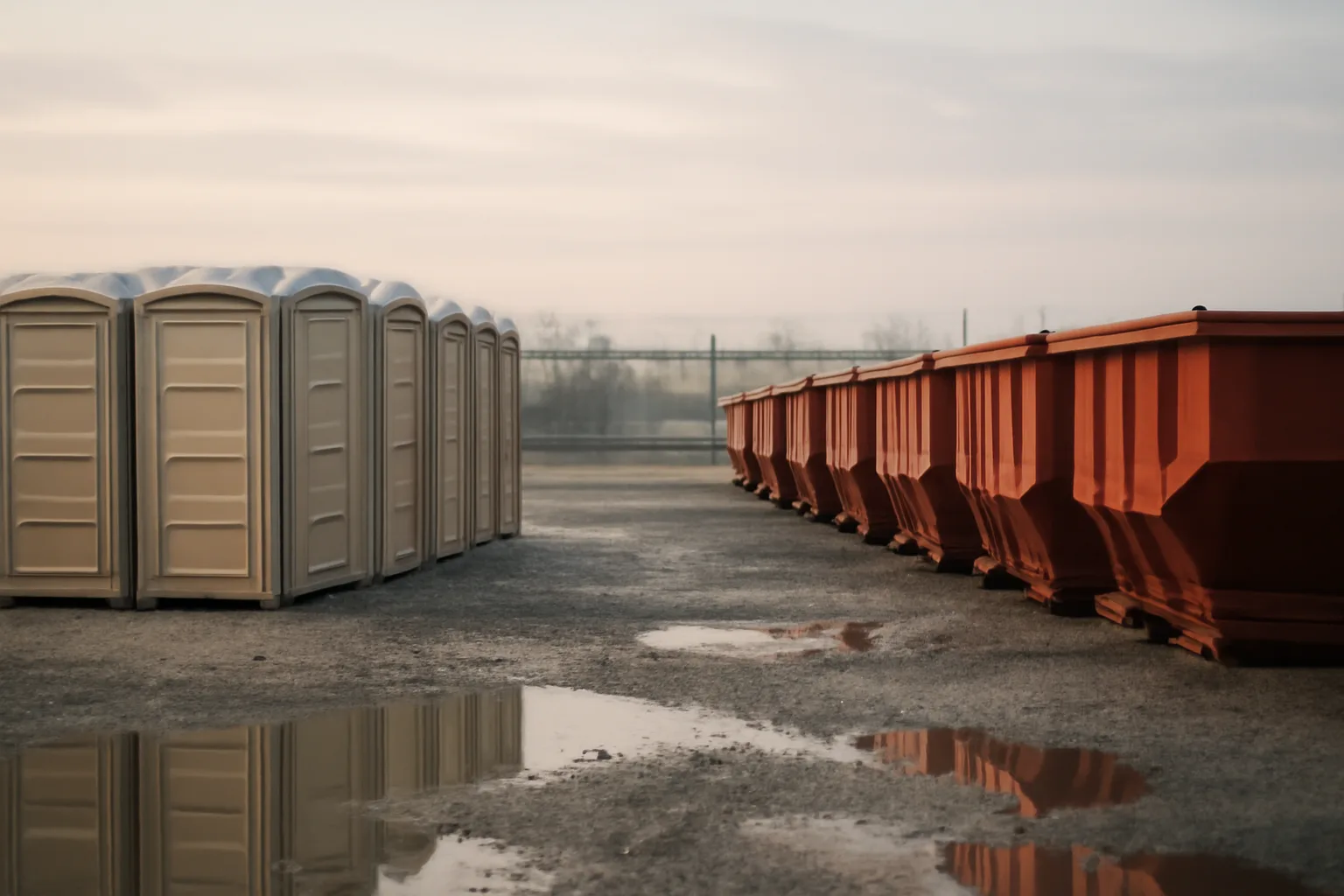
A site services yard is a fenced industrial lot where you store, clean, and dispatch portable toilets, temporary fence panels, roll-off boxes, and the trucks that run them to jobsites and events. It is a working depot. It is not a showroom, and it is not a contractor's office with a couple of units parked out back.
Most operators mix two or three product lines because the same diesel, the same dispatcher, and the same gravel pad can carry more than one rental stream. Portable sanitation is the weekly route that keeps cash moving. Temporary fence is lumpy and job based. Roll-offs need more truck, more tip-fee paper, and a landfill that will open an account for you. Pick the mix before you lease land. The mix decides the permits.
The Census Bureau files portable toilet rental and related septic work under NAICS 562991, Septic Tank and Related Services.[13] Roll-off hauling often lands in solid waste collection instead. Your banker and your insurer will ask for a code. Use the one that matches what you actually move, not the one that reads cleaner on a loan form.
A real yard has a clean line and a dirty line. Empty units sit where a customer will never see last week's mud. Returns sit where wash water cannot run to a ditch. You want a shop bay, lighting that works at 5 a.m., and a gate you can lock. Drainage is not cosmetic. If toilet residual or truck wash reaches a creek, you have a water case, not a housekeeping note.
People type "site services yard" and get franchise mythology. Ignore it. This is a land-use and motor-carrier business with a rental catalog glued on. If the lot is illegal, the catalog does not save you. If the truck is unmarked, the brand wrap does not save you either.
How do you start a site services yard?
You start a site services yard by forming a legal entity, getting a free EIN, registering where your state tells you to register, then proving the lot can legally hold outdoor storage and heavy trucks. Once the land is legal, you add vehicle credentials, waste or septage credentials, and the water paper your mix triggers. You do not buy a national operator license. The United States does not issue one.
The IRS treats the EIN as a free identifier. The Service says, "Applying for an Employer Identification Number (EIN) is a free service offered by the Internal Revenue Service."[1] Do it on the IRS site. Do not pay a reseller a dime for it.
Pick a structure you actually understand. The IRS lays out sole proprietorships, partnerships, corporations, and LLCs on its business structures page.[2] Publication 583 walks through the records you will need once money moves.[3] SBA's register-your-business guide is a decent federal checklist for state filings and local licenses, and then you still call your county clerk.[4]
Here is the sequence I would run. Entity and EIN in week one. A written zoning or permitted-use confirmation before you sign any lease. An insurance binder before the first unit hits the lot. USDOT and state waste paper before the first public-road trip. Hiring comes after you know the truck class. Software can wait.
Do not order 80 toilets because a webinar said density wins. Density wins after the lot is legal and the disposal plant has said yes in writing. Until then you are collecting plastic and risk.
What licenses does a site services yard actually need?
A site services yard needs a local business license, proof the land use is allowed, and the hauling and disposal credentials that match toilets, dumpsters, or both. There is no single federal yard license. Confirm every fee and form with the board that prints it. I will not invent a current state fee or a processing clock. Those numbers move, and a stale one is worse than none.
Think in stacks, not in a shopping list someone sold you.
| Service mix | Federal floor you can name | What you confirm locally |
|---|---|---|
| Portable toilets | 40 CFR Part 503 only if you treat or land-apply sewage sludge. Most small yards deliver to a treatment plant instead.[12] | County or state septage or liquid-waste hauler credential, vehicle decals, written plant acceptance |
| Roll-off dumpsters | USDOT if the truck is a CMV in interstate commerce at 10,001 pounds or more.[5] | State waste transporter permit, landfill account, sometimes a local hauler franchise |
| Temporary fence only | USDOT and CDL only if the truck itself qualifies.[5][14] | Business license, oversize or right-of-way permits for install days |
| Shared diesel or bulk oil | SPCC if aggregate aboveground oil storage exceeds 1,320 U.S. gallons at a covered facility.[7] | Fire marshal, tank registration, possibly a local flammable-liquids permit |
A contractor license is a different animal. Renting and hauling units is not automatically construction. Installing fence or dropping boxes in a public right of way can trip local permit rules even when your state contractor board has no interest in you. Ask both desks. Do not let a forum decide it.
If a seller promises one kit covers "all 50 states," walk away. That product cannot know your county health form.
Do yard trucks need a USDOT number and CDLs?
Most site services yards need a USDOT number once a truck used in interstate commerce meets FMCSA's commercial motor vehicle tests, including the 10,001 pound GVWR or GCWR trigger. FMCSA publishes that test on its Do I Need a USDOT Number page.[5] Intrastate rules are a state question. Confirm them with your state motor carrier desk or DMV. They are not a copy of the federal page.
FMCSA requires a USDOT number for many commercial motor vehicles used in interstate commerce at 10,001 pounds GVWR or GCWR.[5] The commercial motor vehicle definition lives in 49 CFR 390.5, with weight, hazmat, and passenger prongs.[6] Read the definition itself. Do not stop at a forum post about "farm plates."
CDL class follows the vehicle, not the product. A 26,001 pound GVWR straight truck, a combination that meets the combination test, air brakes, or a tank endorsement can pull you into the CDL world.[14] Plenty of fence panel trucks sit under the CDL line. Plenty of vacuum trucks do not. I would match the door, the registration, and the job posting to the same class before I hired anyone.
Marking rules travel with the USDOT number. Legal name and number on the truck matter more than a wrap. Get the carrier registration right, then make it pretty.
What zoning and land-use rules hit a yard first?
The first hard no is zoning. A site services yard is outdoor storage plus truck traffic plus odor risk if you wash toilets on site. Residential lots fail. Most retail strips fail. You want industrial, light industrial, or a conditional-use permit that names outdoor storage and fleet parking in plain language.
I would not sign a lease on a story about how the last tenant ran trucks. Get the use in writing from planning. Ask about screening, hours, overnight idling, backup beepers, and designated truck routes. Neighbors file the complaints that close yards. A planner's email beats a landlord's shrug every time.
If you will grade, grub, or otherwise disturb one or more acres to build pads, EPA's 2022 Construction General Permit (or the state program that replaced it in authorized states) can apply at that one-acre line, including smaller pieces of a larger common plan.[9] A gravel refresh on a half-acre existing lot is a different fact pattern. Tell the water board what you will actually disturb. Do not describe a garden.
Shared lots are common and messy. Who holds the use permit? Who is the tenant of record? If you split a pad, write the answer down before the first toilet arrives. Insurance fights later if you skip that. More on that paper lives in site services yard guide 29.
What environmental paper does an outdoor yard trigger?
Outdoor yards trip water paper more than people expect. Fuel and oil are the quiet one. EPA's SPCC rule is the federal floor for many non-transportation facilities that store oil and could reasonably discharge to navigable waters. 40 CFR 112.1 exempts a facility only when, among other tests, "the aggregate aboveground storage capacity of the facility is not greater than 1,320 U.S. gallons."[7]
A single 500-gallon diesel tank is not the whole test. Count totes. Count drums. Count a parked fuel skid. If you are near the line, get a competent SPCC person, not a cousin with a template.
Industrial stormwater coverage (EPA's 2021 Multi-Sector General Permit or your state's version) can apply if the activity matches a listed sector, including certain transportation and waste facilities.[8] A tidy equipment-rental pad is not automatically in. An oily wash-down lot with scrap and stained gravel might be. Ask the state water board. Bring photos.
If you land-apply septage, you have walked into 40 CFR Part 503.[12] Most small toilet operators should skip that in year one. Hold residual and take it to a publicly owned treatment works that will accept it. Get the acceptance in writing, with any strength or volume limits the plant cares about.
Wash water is the thing operators lie to themselves about. Soap, fecal residual, and diesel sheen are not "just dirt." Design the pad so it cannot reach a ditch on a wet Tuesday.
What waste and septage licenses apply to toilets and roll-offs?
If you pump toilets or haul municipal solid waste, your state environmental agency or county health department almost always has a hauler registration. The federal floor does not replace it. 40 CFR Part 503 covers sewage sludge use and disposal, not a substitute for a county decal.[12]
I cannot quote your state's fee. I will not guess a quota or a wait time. Confirm with the board. Ask for the exact form name. Ask whether the decal goes on the door or the tank. Ask whether a leased truck still needs your number on it. Ask whether a weekend event load counts the same as a Monday construction route.
Roll-off only operators often need a waste transporter permit plus a landfill or transfer-station account. Toilet-only operators often need a septage or liquid-waste hauler permit plus that disposal agreement. Combined fleets need both stacks. That is the boring truth, and it is why mixed yards stall in month two.
If a plant says no, you do not have a business. You have inventory. Lock disposal before you buy the third trailer of toilets.
What insurance should you buy in year one?
Year-one insurance is general liability, commercial auto, and coverage for rented units while they sit on someone else's dirt (inland marine or a rental floater). Add workers' compensation when you have employees, on the timetable your state sets. I will not invent a premium. Your mix, your claims history, and your garage location set that number.
Read how site services yard insurance is actually written before you let a package policy hide a hole. Auto schedules and hired-auto gaps are where small fleets get surprised. That breakdown is in site services yard guide 23.
If two names share a gate, ask who is the named insured and who is only an additional insured. That argument shows up after the first backed-into panel, and it is cheaper to have on paper than in a claim file. See site services yard guide 29 and the follow-on notes in site services yard guide 35.
Inland marine limits should match the peak value sitting on a job, not the average Tuesday. A storm that flattens a fence run will not care that you "usually" have 20 panels out. For certificates that GCs actually accept, use site services yard guide 41 and site services yard guide 47.
How much cash does first-year operations take?
Nobody has a clean national cost for standing up a site services yard. Land rent in a real industrial park and land rent on a county road are different species. A used 20-toilet starter set and a new vacuum truck are different species. Anyone handing you one number is selling something.
What I would budget as categories, not amounts: lease deposit and first months, gravel and drainage, used units with readable serial numbers, one truck you can keep on the road, insurance down payment, fuel, dump or plant tipping, and three months of thin receivables. Construction customers pay slow. Events pay faster and vanish in November.
If you want a worksheet for shared-lot math, SiteServicesPath sells a $249 one-time Shared-Yard Economics Kit. A notebook and honest lease numbers work too. Do not let a worksheet talk you into land you have not walked with a planner.
I would lease in year one unless you already have route density and a use that is locked. Buying the dirt feels serious. It also nails you to a zoning fight you have not finished.
What OSHA rules apply on the yard on day one?
Treat the yard like a storage and loading site from the first afternoon. OSHA's construction materials rule says, "All materials stored in tiers shall be stacked, racked, blocked, interlocked, or otherwise secured to prevent sliding, falling or collapse."[10] Fence packs and nested boxes fall on people. A painted line and a stacking limit are cheap.
If employment rose above 10 employees at any time during the calendar year, the partial exemption in 29 CFR 1904.1 does not apply, and injury logs are in play unless another exemption does.[11] That partial exemption stops at 10 or fewer employees for the ordinary log-keeping duty.[11] Confirm current status. It is not a vibe.
Eye wash near the dirty line. Gloves people will actually wear. A forklift with brakes. That is the culture. Paper follows culture. A binder full of untrained signatures is theater.
How do you hire drivers and yard labor without getting dinged?
Every hire gets a Form I-9. USCIS publishes the form and the instructions.[15] Pay at least the federal wage floor and your state floor, whichever is higher. If the truck needs a CDL, the driver needs that class and the endorsements on day one, not a promise.[14]
Do not 1099 your only driver who runs your truck on your route. If you control the route, the truck, and the uniform, budget for an employee. That is how you avoid buying an audit with your first spare key.
Drug and alcohol testing follows FMCSA once you are in the CDL safety-sensitive world.[14] Line up the clearinghouse and testing vendor before the first trip that needs them. A weekend hire to cover a festival is still a hire.
What is a waste of money in the first year?
A national "we handle all licenses" package is a waste. So is a brand-new vacuum truck before you have a disposal plant and a route. So is paving the whole lot in month one when gravel and a proper wash pad would do the job. So is a CRM you will never open.
Buy used units with a serial-number trail you can verify. Buy one truck a mechanic in your county will touch. Spend money on drainage and on the disposal contract. Those two keep you open.
Skip the wrap until the door lettering meets FMCSA and state marking rules.[5] Pretty is optional. Legal names and numbers are not. A second product line before the first one bills clean is how yards drown in idle steel.
How do you confirm facts with the board that actually matters?
Call the county planner and ask whether outdoor storage of portable sanitation units and roll-offs is allowed at the address, by right or by permit. Call the state environmental or health program that lists septage haulers and waste transporters. Call FMCSA or your state motor carrier desk if you are not sure you are interstate.[5] Call your insurer with the same description you gave the planner.
Write down the person's name, the form number, and the date. Boards swap PDFs. Your notes are the only memory you can trust. No approval lives in this article. No timing promise lives here either.
This publication is a reference. It is not a law firm and not a service company. If you want the start path and the kit, use /start.
Frequently asked questions
What is a site services yard?
A site services yard is a zoned industrial depot for storing, washing, and dispatching portable toilets, temporary fence, roll-off boxes, and the trucks that serve jobsites and events. It is a land-use and hauling operation with a rental catalog attached. Census NAICS 562991 often fits toilet and septic work. Confirm land use with local planning before you buy units.
How do you start a site services yard?
Form an entity, get a free IRS EIN, register with your state, then get the lot's outdoor-storage use in writing. Add USDOT, CDL, waste, septage, and stormwater paper only if your mix and trucks trigger them. Secure a disposal plant in writing before you scale toilets. Confirm every fee with the issuing board. There is no national yard license.
Do I need a contractor license to run a site services yard?
Often no, if you only rent and haul units. Installing fence, placing boxes in a public right of way, or doing site work can trip local permits or a state contractor board. That line is local. Ask the contractor board and the city permit desk the same question, with your actual scope, and keep the answer.
Can I put a site services yard on agricultural land?
Sometimes, if zoning or a use permit allows outdoor storage and truck traffic. Agricultural designation alone is not permission to wash toilets or park roll-offs. Odor, screening, and road use draw complaints. Get planning to say yes in writing for this use at this address before you sign a farm lease.
How many portable toilets do I need to start?
There is no honest national starter count. Buy only what you can place, service, and dump under a written plant agreement. A small used set beats idle new plastic. Scale after invoices clear and the truck stays up. Density talk is useless until disposal and zoning are real.
Do fence delivery trucks need a CDL?
Only if the vehicle itself meets CDL tests, such as GVWR, combination weight, air brakes, or required endorsements. Many panel trucks sit under that line. Confirm the registration, the manufacturer plate, and FMCSA CDL rules before you write the job ad. Do not hire on a promise to "get the license later."
Is portable toilet waste hazardous waste?
Ordinary portable toilet residual is handled as septage or domestic wastewater, not as listed hazardous waste, in typical small-yard practice. It still needs a legal hauler credential and a plant that will take it. Land application pulls in 40 CFR Part 503. Do not dump it. Get written acceptance from the treatment works.
How long does licensing take?
It depends on your county planner, state hauler desk, and whether your trucks are interstate. I will not invent a processing time. Boards change queues. Ask the issuing office for the current form and any stated clock, then plan work to start only after the use and the disposal agreement exist.
Can two companies share one site services yard?
Yes, and it is common. Write who holds the lease, the use permit, the waste credentials, and the insurance named-insured slot. Shared gates create claim fights after the first backed-into panel. Confirm with planning that two operators are still the approved use, not a silent sublease violation.
What NAICS code does a site services yard use?
Portable toilet rental and septic work often use NAICS 562991, Septic Tank and Related Services, per the Census Bureau. Roll-off hauling may fit solid waste collection instead. Use the code that matches revenue, not the one that sounds nicer to a lender. Your insurer will ask, so keep it consistent.
Do I need a stormwater permit for a gravel yard?
Maybe. Building or grading one or more acres can trip construction stormwater coverage under EPA's 2022 CGP or a state analog. Ongoing industrial stormwater coverage depends on whether your activity matches a listed sector. A clean rental pad and an oily wash lot are different facts. Ask the state water board with photos.
What if I store diesel at the yard?
Count every aboveground oil container toward EPA's SPCC aggregate. 40 CFR 112.1 uses a 1,320 U.S. gallon aboveground threshold in the exemption tests, plus a reasonable-discharge-to-waters test. Local fire rules still apply under that line. Do not ignore drums and totes. Get help if you are close.
Should I buy the lot or lease it in year one?
Lease, unless you already have route density and a locked land use. Buying feels serious and traps you in a zoning or neighbor fight. A one-year industrial lease with a written permitted use is enough to learn if the mix bills. Buy dirt after the route is real.
Do event toilets need different paper than construction toilets?
The federal floor is the same waste and vehicle rules. Cities and venues add event permits, after-hours access, and sometimes extra insurance certificates. Construction sites add GC vendor packets. Your hauler credential and disposal agreement still have to be valid for both. Confirm the venue's certificate language before you roll.
Sources
- IRS, Apply for an Employer Identification Number (EIN) Online: Applying for an EIN is a free service offered by the IRS.
- IRS, Business Structures: IRS describes sole proprietorship, partnership, corporation, and LLC choices for a new business.
- IRS, Publication 583 Starting a Business and Keeping Records: Publication 583 is the IRS guide to records a new business should keep.
- U.S. Small Business Administration, Register Your Business: SBA outlines state registration and local license steps after choosing a structure.
- FMCSA, Do I Need a USDOT Number?: FMCSA requires a USDOT number for qualifying CMVs in interstate commerce, including the 10,001 pound weight test.
- eCFR, 49 CFR 390.5 Definitions: 49 CFR 390.5 defines commercial motor vehicle using weight, hazmat, and passenger criteria.
- eCFR, 40 CFR 112.1 SPCC general applicability: 40 CFR 112.1 uses a 1,320 U.S. gallon aggregate aboveground oil storage threshold in SPCC exemption tests.
- U.S. EPA, EPA's 2021 MSGP for industrial stormwater: EPA's 2021 Multi-Sector General Permit covers stormwater from listed industrial sectors.
- U.S. EPA, 2022 Construction General Permit (CGP): EPA's 2022 CGP applies to construction disturbance of one or more acres, or smaller sites in a larger common plan.
- OSHA, 29 CFR 1926.250 General requirements for storage: OSHA requires tiered materials to be stacked, racked, blocked, interlocked, or otherwise secured against collapse.
- OSHA, 29 CFR 1904.1 Partial exemption for employers with 10 or fewer employees: OSHA 1904.1 partially exempts employers with 10 or fewer employees from routine injury-log keeping.
- eCFR, 40 CFR Part 503 Standards for the Use or Disposal of Sewage Sludge: 40 CFR Part 503 sets federal standards for sewage sludge use and disposal, including septage pathways.
- U.S. Census Bureau, NAICS 562991 Septic Tank and Related Services (2022): NAICS 562991 covers septic tank and related services, the usual home for portable toilet rental.
- FMCSA, Commercial Driver's License: FMCSA sets when a driver must hold a CDL based on vehicle class and endorsements.
- USCIS, Form I-9, Employment Eligibility Verification: USCIS requires Form I-9 to verify identity and employment authorization for each hire.