Last updated 2026-08-18
TL;DR
A site services yard in Colorado costs roughly $1,500 to $6,000 or more in first-year licensing, permits, and local approvals, depending on county and yard size. You'll need a state contractor registration, likely a county business license, and zoning clearance. Processing runs 4 to 12 weeks. Confirm every fee with the issuing agency before you write a check.
What is a site services yard in Colorado, and what does the state actually regulate?
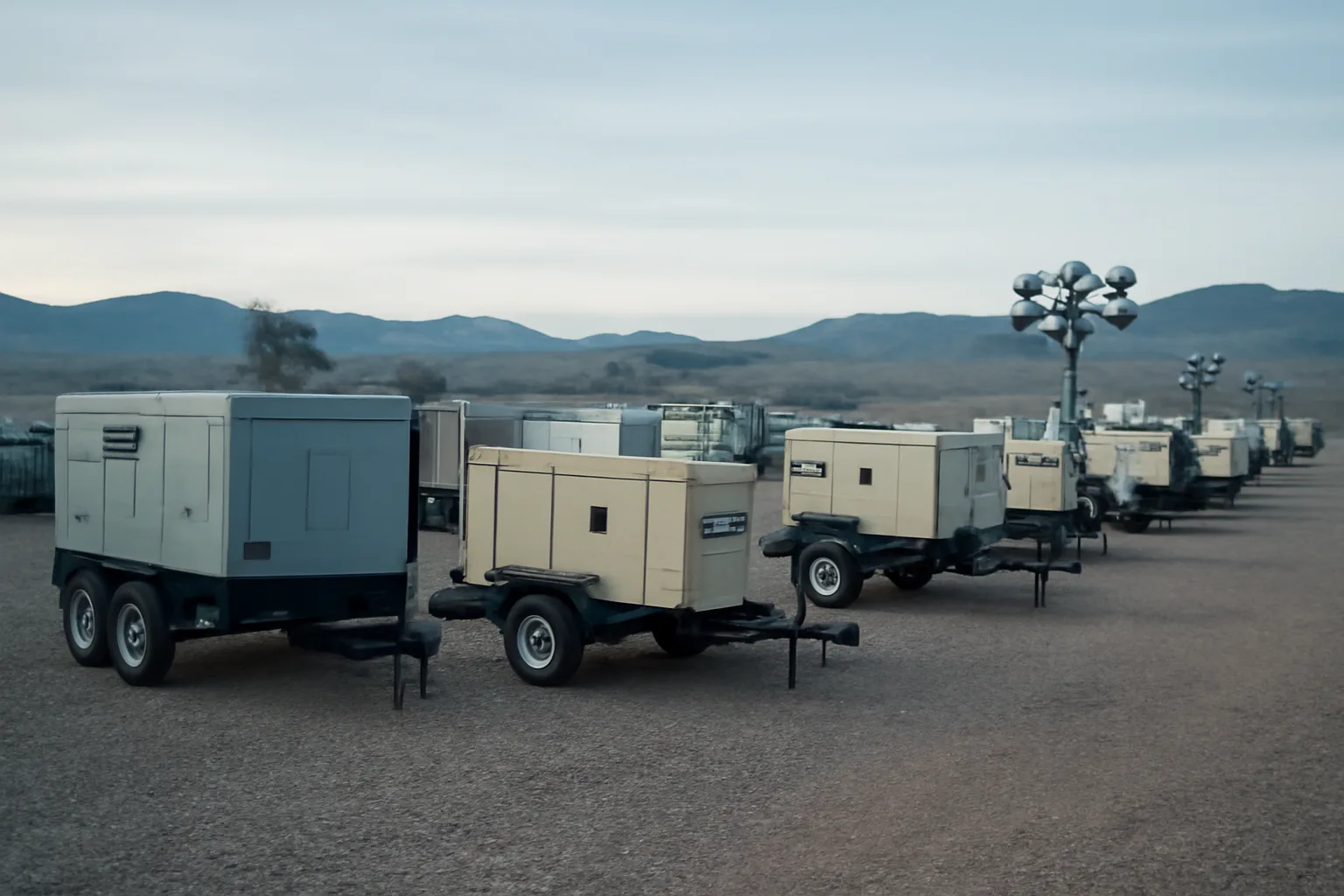
A site services yard stores, maintains, and dispatches portable toilets, temporary fencing, roll-off containers, construction trailers, or similar equipment between job sites. Colorado has no single license called a "site services yard license." The regulation comes in layers: state contractor registration, county or municipal business licensing, zoning approval, and sometimes environmental permits for waste-handling equipment.
The Colorado Department of Regulatory Agencies (DORA) oversees most trade licensing. Portable sanitation is different. Once your yard handles human waste, you're under Colorado Department of Public Health and Environment (CDPHE) rules. A yard that services portable restrooms and hauls septage triggers CDPHE's Water Quality Control Division registration and operational requirements, separate from any contractor credential [1].
Strictly equipment storage with no waste processing on site? The load drops hard. You're looking mainly at local zoning, a general business license, and a state sales tax license if you rent or sell taxable goods.
Do you need a license for a site services yard in Colorado?
Yes, but the specific license depends on what the yard actually does. Here's the honest breakdown.
State contractor registration. Colorado requires contractors doing construction-related work to register with DORA's Office of Consumer Affairs. The registration fee has been $75 per two-year period. Confirm the current amount directly with DORA before you file [2].
Colorado sales tax license. Rent equipment where the rental is taxable (most construction equipment rentals are) and you need a Colorado Retail Sales Tax License from the Department of Revenue. The application is free [3].
CDPHE registration for waste haulers. Yards that service portable restrooms and haul the waste must follow CDPHE solid and liquid waste rules. The division's regulations under 5 CCR 1002-22 govern wastewater management, and non-compliant haulers face civil penalties [1].
County business license. Most Colorado counties and all home-rule municipalities require a local business license or occupational tax registration. Fees range from $0 in some unincorporated counties to several hundred dollars in cities like Denver or Colorado Springs. Confirm with your specific county clerk or municipal licensing office.
Zoning and land use approval. This is frequently the hardest hurdle. Storing heavy equipment in a commercial or light industrial zone is often permitted by right, but some counties require a conditional use permit or special review. In El Paso County, for example, outdoor storage yards in industrial zones are a use-by-right, but proximity to residential parcels can trigger a full planning review [4].
Most Colorado site services yards carry at least three credentials: a state contractor registration or equivalent, a sales tax license, and local zoning approval. Yards handling portable sanitation waste add CDPHE registration.
How much does a site services yard cost in Colorado?
Startup costs vary a lot by county, yard size, and what services you offer. The table below gives you a realistic range for the paper costs alone, not equipment or real estate.
| Cost Item | Low Estimate | High Estimate | Notes |
|---|---|---|---|
| State contractor registration (2-year) | $75 | $75 | Confirm with DORA [2] |
| Colorado sales tax license | $0 | $0 | Free; Department of Revenue [3] |
| CDPHE waste hauler registration | $0 | $500+ | Varies by permit type [1] |
| County/city business license | $0 | $500 | Highly variable by jurisdiction |
| Zoning / conditional use permit | $200 | $3,000+ | Planning review fees vary widely [4] |
| Site plan review (if required) | $150 | $2,000 | Some counties waive for existing structures |
| Stormwater permit (if applicable) | $0 | $500 | CDPHE MS4 areas [5] |
| Total paper costs, year one | $425 | $6,575+ | Before insurance or equipment |
A yard in an unincorporated rural county doing no waste handling might clear all permitting for under $500. A yard in a metro area like Denver, Aurora, or Fort Collins that handles portable sanitation waste and needs a conditional use permit could spend $3,000 to $6,000 or more before a single piece of equipment moves.
Colorado's state sales tax rate is 2.9%, and local sales taxes stack on top, reaching 8% or higher in some jurisdictions [3]. That matters if you rent taxable equipment, because you collect and remit the combined rate, more than the state slice.
Insurance isn't a permit fee, but it's a first-year cash requirement you can't skip. General liability for a small site services yard in Colorado typically runs $1,200 to $3,500 per year depending on payroll and gross revenue, based on standard GL rating for contractors. Commercial auto for a yard with two or three trucks adds another $3,000 to $7,000 annually. Get actual quotes. Those ranges come from industry broker guidance, not Colorado-specific published data.
For people trying to model the full economics before committing, SiteServicesPath's Shared-Yard Economics Kit ($249, one-time) lays out the cost structure in spreadsheet form so you can plug in your county's actual numbers.
How long does getting a site services yard approved take in Colorado?
State-level registrations are the fast part. DORA contractor registration often processes in one to three weeks for a complete online application [2]. The Colorado sales tax license from the Department of Revenue is typically issued within five business days online [3].
Local approvals take longer. A straightforward business license in a city with an online portal might come back in a week. A conditional use permit or special review in a county with a planning board can take 60 to 120 days or more, because it involves public notice periods, staff review, and a hearing date set on a fixed calendar.
The realistic total for a yard that needs a conditional use permit: 10 to 16 weeks from application to final approval. A yard in a county where outdoor equipment storage is a use-by-right and business licensing is administrative might be fully papered in three to five weeks.
CDPHE registration timelines for waste haulers depend on application completeness and current agency workload. The Water Quality Control Division carries a heavy caseload. Budget six to eight weeks and submit a complete package the first time. Incomplete applications reset the clock.
Nobody can promise a specific timeline. Actual processing time depends on the receiving agency's queue, how complete your application is, and whether your site triggers extra review (endangered species, floodplain, historic district). Confirm current processing times with each agency before you set a go-live date.
What zoning and land use rules affect a Colorado site services yard?
Zoning is where site services yard operators get surprised. Colorado is a home-rule state, so counties and municipalities set their own land use rules. There's no single statewide zoning code.
For most yards, the target zone is I-1 or I-2 (light to heavy industrial) or a commercial zone that explicitly permits outdoor storage. Storing heavy equipment in a residential or agricultural zone is almost always prohibited or needs a variance that's hard to win.
El Paso County's Land Development Code allows outdoor storage yards as a permitted use in industrial zones but applies buffer and screening requirements near roads and residential parcels [4]. Jefferson County has similar provisions and adds stormwater management requirements for yards over a certain size. Denver's zoning code runs on a different system, with industrial mixed-use (I-MX) and general industrial (I-A, I-B) zones that carry their own outdoor storage rules.
Here's the practical move. Before you sign a lease on a yard parcel, pull the zoning designation and call the county or city planning office. Ask two questions: (1) Is outdoor equipment storage a permitted or conditional use in this zone? (2) Are there any pending rezoning actions or overlay districts that affect this parcel? Those two calls cost nothing and can save you from a site you can't legally use.
What environmental permits apply to Colorado site services yards?
Two environmental permit categories come up most for site services yards in Colorado.
First, stormwater. If your yard disturbs more than one acre of land (including grading for equipment pads or access roads), you need a stormwater construction permit from CDPHE under the Colorado Discharge Permit System (CDPS) [5]. Even after construction, yards in areas covered by municipal separate storm sewer systems (MS4) may have to follow best management practices for runoff off equipment storage areas. CDPHE's Water Quality Control Division administers these.
Second, portable sanitation waste handling. Colorado Regulation 22 (5 CCR 1002-22) governs "domestic wastewater" and portable sanitation waste [1]. Yards that accept portable restroom waste for transfer or treatment have to comply, and that includes rules for licensed disposal sites. You cannot legally dump portable sanitation waste into a sanitary sewer without the local wastewater authority's approval, and you cannot discharge it to land without specific CDPHE authorization.
A yard that does zero waste handling (equipment storage only, no toilet servicing on site) largely skips the environmental permit layer. That's one reason some operators structure the business to handle waste exclusively at licensed third-party disposal facilities rather than on their own yard.
What does insurance cost for a site services yard in Colorado?
Colorado has no single mandated insurance minimum for a generic site services yard. Your contracts, landlord, county, and plain common sense force the issue anyway.
Most customer contracts and property leases require general liability of at least $1 million per occurrence. If you have employees, Colorado requires workers' compensation for all of them, with no minimum payroll threshold [6]. Workers' comp rates for equipment yard workers vary by job classification but frequently run $8 to $15 per $100 of payroll for people handling heavy equipment, based on NCCI classification guidance. Confirm current rates with your carrier.
Commercial auto coverage is mandatory for any vehicle on public roads. Colorado state minimum liability limits are $25,000/$50,000/$15,000 for bodily injury and property damage [7]. Those minimums are almost certainly too low for a truck hauling portable toilets or roll-off containers. Most operators carry $500,000 to $1 million combined single limit on commercial vehicles.
Talk to your broker about a pollution liability policy if the yard touches any waste streams. Standard GL policies typically exclude pollution events, and a spill from a portable sanitation tank can generate CDPHE enforcement costs that dwarf the premium.
How do Colorado site services yard costs compare to nearby states?
Colorado sits in the middle of the Western states pack. Arizona has lighter zoning restrictions in many counties and no state income tax on business revenue, which lowers first-year overhead for new yards. California's licensing and environmental compliance costs run substantially higher, with AQMD permits, CalRecycle registration, and local business taxes adding layers Colorado doesn't have.
Utah and Idaho keep licensing simpler in rural areas, though metro markets like Salt Lake City or Boise can rival Colorado's front-range cities for permit complexity.
For a direct neighbor comparison: site services yard cost in Arizona and site services yard cost in California walk through those states' specific paper paths. Running a multi-state operation? site services yard cost in Idaho and site services yard cost in Illinois cover two very different regulatory environments worth benchmarking against.
The biggest differentiator in Colorado is county-by-county variance. A yard in Huerfano County operates under materially different rules and fee schedules than a yard in Adams County, even though both sit in the same state. That variance runs wider here than in states with more centralized licensing.
What's the first-year paper checklist for a Colorado site services yard?
Here's a practical sequence. This isn't legal advice, and you should confirm each step with the relevant agency before you file.
1. Confirm zoning. Call the county or city planning office before signing any lease. Get the answer in writing if you can. 2. Apply for conditional use permit (if required). Start this first because it's the longest lead-time item. 3. Register with DORA if your work qualifies as contractor activity [2]. 4. Apply for Colorado sales tax license through the Department of Revenue's Revenue Online portal [3]. 5. Register with CDPHE if you handle portable sanitation waste [1]. 6. Apply for county or city business license. Some jurisdictions require proof of state registration before issuing local licenses. 7. Obtain stormwater permit if site disturbance exceeds one acre [5]. 8. Bind insurance. Have certificates of insurance ready before the county finalizes any permit. 9. File EIN with IRS if you haven't already (free, at IRS.gov). 10. Set up sales tax reporting. Colorado's Department of Revenue requires quarterly or monthly filing depending on volume [3].
SiteServicesPath's Shared-Yard Economics Kit (available at /start) includes a printable version of this checklist with agency contact information for Colorado's major metro counties. That's the second and last mention of the product. The rest of this article is a straight reference.
What ongoing annual costs should a Colorado site services yard budget for?
First-year costs are the spike. Ongoing annual costs are lower but real.
Contractor registration renewal with DORA comes every two years at the current fee [2]. Local business licenses in most jurisdictions renew annually, usually at the same fee as the initial application. Some cities add a gross receipts surcharge that scales with revenue, so your renewal cost climbs as business grows.
Sales tax remittance is ongoing but not a cost per se. It's revenue you collect and pass through to the state and localities. The administrative burden is real though, especially if you operate in multiple Colorado jurisdictions with different local rates. The Colorado Department of Revenue's Sales Tax Lookup tool lists current rates by jurisdiction [3].
Workers' compensation premium renews annually and adjusts with payroll. Add trucks or a second yard and insurance premiums reset. Environmental compliance costs (stormwater inspections, waste manifesting) recur if those permits apply to your yard.
A reasonable ongoing annual paper compliance estimate (not equipment, labor, or real estate) is $500 to $2,000 per year for a single-county yard that handles no waste. Add CDPHE waste compliance and multi-jurisdiction sales tax filing and that range rises to $1,500 to $4,000 annually. These aren't audited figures. They're reasonable estimates from the fee structures cited above.
Frequently asked questions
Do you need a license for a site services yard in Colorado?
Yes, though no single license covers it. Most yards need a state contractor registration from DORA, a Colorado sales tax license from the Department of Revenue, and a local business license or zoning approval from the county or city. Yards that handle portable sanitation waste add a CDPHE registration under Colorado's wastewater regulations. The exact combination depends on your services and location.
How much does a site services yard cost in Colorado?
Paper costs in the first year range from roughly $425 in a rural county with no waste handling to $6,500 or more in a metro area requiring a conditional use permit and CDPHE registration. State contractor registration is $75 for two years. A Colorado sales tax license is free. Zoning and planning fees are the biggest variable. Confirm every fee with the issuing agency before you apply.
How long does it take to get a site services yard approved in Colorado?
State registrations typically process in one to three weeks. A city or county business license can come back in a few days if the application is online. A conditional use permit requiring a planning board hearing adds 60 to 120 days. CDPHE waste hauler registration can take six to eight weeks. A realistic total timeline for a yard needing local zoning approval is 10 to 16 weeks. No agency guarantees a specific time.
Does Colorado require environmental permits for a site services yard?
It depends on what the yard does. If you disturb more than one acre of land during setup, you need a CDPS stormwater construction permit from CDPHE. Yards handling portable sanitation waste must comply with Colorado Regulation 22 (5 CCR 1002-22). Pure equipment storage yards with no waste handling usually avoid environmental permits, though stormwater best management practices may still apply in MS4 areas.
What zoning designation does a Colorado site services yard need?
Most yards operate in light or heavy industrial zones (I-1 or I-2 in many county codes) where outdoor equipment storage is a permitted use. Agricultural and residential zones almost never allow it. Home-rule municipalities have their own codes, so the designation name varies. Always call the planning office and confirm the specific parcel's zoning before signing a lease. Get any verbal answer in writing.
Is workers' compensation insurance required for Colorado site services yard employees?
Yes. Colorado requires workers' compensation for all employees with no minimum payroll threshold. Rates for workers in equipment yard classifications typically run $8 to $15 per $100 of payroll, depending on the NCCI job code and your carrier. Get quotes from at least two Colorado-licensed carriers. If a yard worker is injured and you don't have coverage, the state can order a stop-work order.
How does Colorado sales tax apply to site services yard rentals?
Colorado's state sales tax rate is 2.9%. Local jurisdictions add their own rates, pushing the combined rate to 8% or higher in some cities. Equipment rental is generally taxable in Colorado. You're responsible for collecting the correct combined rate based on where the equipment is delivered or used, not where your yard is located. Register through the Department of Revenue's Revenue Online system.
Can I run a site services yard from an agricultural property in Colorado?
Generally no, not without a variance or conditional use permit, and those are hard to win for commercial equipment storage in agricultural zones. County planning offices typically view commercial equipment yards as incompatible with agricultural land use designations. Some rural counties with limited commercial land may have specific provisions, but verify the exact parcel's allowed uses before assuming agricultural land works.
What's the difference between a site services yard in Denver versus a rural Colorado county?
Denver uses its own unified development code with specific industrial zone categories (I-A, I-B, I-MX) and higher business license fees. Rural counties like Huerfano or Custer have simpler licensing, often lower fees, and may allow outdoor storage in more zone types. The tradeoff is that rural yards sit farther from job site density, which affects dispatch efficiency. Metro areas have more regulatory layers but more customers.
Do Colorado site services yards need a federal EIN?
Yes, if you're operating as any entity other than a sole proprietor with no employees. Even sole proprietors with employees need an EIN. The IRS issues EINs for free through IRS.gov, usually instantly via the online application. You'll need it to open a business bank account, apply for your Colorado sales tax license, and file any state payroll taxes.
What happens if I start a site services yard without proper permits in Colorado?
Consequences depend on which permit is missing. Operating without a required CDPHE registration can result in civil penalties. Running without a county conditional use permit can trigger a stop-work notice or order to vacate. Collecting sales tax without a license creates back-tax liability. Most Colorado agencies will work with operators who self-report and cure the issue, but penalties can be substantial for willful violations.
Are there specific Colorado rules for portable toilet waste disposal from a site services yard?
Yes. Colorado Regulation 22 (5 CCR 1002-22) under CDPHE governs domestic and portable sanitation waste. Waste must go to a licensed disposal facility, typically a municipal wastewater treatment plant that has agreed to accept it. You cannot discharge to land or unauthorized locations. Some yards contract with licensed septage receiving facilities rather than managing disposal logistics themselves.
How do I find out the exact permit fees for my Colorado county?
The most reliable method is calling the county planning or community development office directly and asking for a fee schedule. Many larger counties post current fee schedules on their planning department websites. For state fees, DORA and the Department of Revenue publish current amounts online, but confirm before submitting because fees can change with the state budget cycle.
Are site services yard costs in Colorado higher than in neighboring states?
Colorado's front-range metro costs (Denver, Fort Collins, Colorado Springs) are comparable to similar-sized metro areas in neighboring states. Rural Colorado is cheaper than rural California but similar to rural Arizona or Utah. Colorado's workers' compensation system and multi-jurisdiction sales tax create ongoing compliance costs that some neighboring states don't have to the same degree. See our Arizona and Idaho state guides for direct comparisons.
Sources
- Colorado Department of Public Health and Environment, Water Quality Control Division, Regulation 22 (5 CCR 1002-22): CDPHE's Water Quality Control Division regulates portable sanitation waste and domestic wastewater handling under 5 CCR 1002-22, requiring registration and compliance for yards that handle such waste.
- Colorado Department of Regulatory Agencies (DORA), Office of Consumer Affairs, Contractor Registration: Colorado requires contractors to register with DORA's Office of Consumer Affairs; the two-year registration fee has been $75 (confirm current fee with DORA).
- Colorado Department of Revenue, Sales Tax Guide: Colorado's state sales tax rate is 2.9%; a retail sales tax license is free; local jurisdictions add additional rates that can push combined rates to 8% or higher.
- Colorado Department of Public Health and Environment, Colorado Discharge Permit System (CDPS) Stormwater Program: Land disturbance of more than one acre for site construction requires a CDPS stormwater construction permit from CDPHE.
- Colorado Department of Labor and Employment, Workers' Compensation Coverage Requirements: Colorado requires workers' compensation insurance for all employees with no minimum payroll or employee-count threshold.
- Colorado Revised Statutes, Title 10 Insurance, Section 10-4-620, Minimum Automobile Liability Insurance: Colorado state minimum automobile liability limits are $25,000/$50,000 bodily injury and $15,000 property damage per CRS Title 10.
- Colorado Secretary of State, Business Registration and Entity Filing: Business entities operating in Colorado must register with the Secretary of State; filing fees vary by entity type.
- Colorado Department of Revenue, Revenue Online Sales Tax Lookup: The Colorado Department of Revenue's Revenue Online system is the official portal for sales tax license registration and rate lookup by jurisdiction.
- Internal Revenue Service, Apply for an Employer Identification Number (EIN) Online: The IRS issues EINs for free through its online application, typically instantly, for qualifying entities.